

How do nylon and speciality coatings contribute to environmental sustainability in industrial applications?
Nylon and speciality coatings can support environmental sustainability by protecting metal components against wear, corrosion and chemical damage, helping extend their usable life and reduce replacement-related material waste. Their environmental benefit depends on selecting a suitable coating, applying it efficiently and managing the coated component responsibly at end of life.
Nylon and speciality coatings can support environmental sustainability by improving the resource efficiency of metal components, reducing reliance on solvent-based finishing and helping products remain fit for purpose for longer. Their overall benefit depends on the coating chemistry, preparation method, application efficiency, curing requirements, maintenance regime and end-of-life treatment.
Key environmental contributions include:
- Lower use of solvent-based materials: Powder coatings are applied as dry powders rather than liquid systems containing organic solvents. This can reduce the release of volatile organic compounds during application, although the environmental profile still depends on the specific coating formulation and the wider production process.
- More efficient material use: In a controlled powder-coating process, overspray may be collected and reused where its cleanliness, colour and technical specification allow. This can reduce coating waste compared with processes in which unused liquid material cannot readily be recovered. Contaminated or mixed powder generally requires separate handling rather than automatic reuse.
- Protection with relatively limited coating mass: A correctly specified coating can provide a functional barrier or wear-resistant surface without replacing the underlying metal with a more resource-intensive component. The coating must be thick enough and suitably bonded for its duty; applying excess material does not automatically improve sustainability.
- Reduced maintenance material demand: A finish designed for the actual exposure conditions may need fewer recoating interventions. This can reduce the associated use of abrasives, cleaning agents, replacement coating material, packaging and transport. The result is application-specific and should be assessed against the coating’s expected operating conditions.
Durability is particularly relevant where a coated component would otherwise be discarded because its surface has become worn, damaged by chemicals or affected by corrosion. Keeping the metal part in service can avoid the material and manufacturing impacts associated with making a replacement. This benefit should be considered across the whole component lifecycle rather than judged solely by the environmental profile of the coating material.
Nylon coatings can be useful where a surface requires a combination of abrasion resistance, impact tolerance, low friction or chemical resistance. Selecting one coating to perform several functions may avoid the need for additional surface treatments or separate protective components. However, nylon is not automatically the most sustainable option for every application. A speciality coating that is technically unnecessary, difficult to repair or unsuitable for the operating environment can create avoidable material and processing impacts.
Application choices also affect the outcome. Effective sustainability planning should consider:
- the service conditions, including abrasion, impact, chemicals, moisture, temperature and movement;
- the required surface preparation and whether it introduces additional cleaning, blasting or chemical-treatment stages;
- the energy needed to heat the component and cure or fuse the coating;
- batch size, component geometry and the potential for efficient powder use;
- the prevention of rejects caused by inadequate preparation, incorrect thickness or unsuitable curing; and
- how masking, hanging, handling and packaging can be managed with minimal waste.
Energy use requires a balanced assessment. Powder coating avoids the solvent emissions associated with many liquid systems, but the metal still has to be heated for the relevant process. Large, heavy or heat-sensitive parts may have different energy requirements from smaller batch components. Grouping suitable parts into well-planned batches can improve process efficiency, while attempting to combine incompatible materials or specifications can increase rework and waste.
Maintenance and repair are also part of the environmental calculation. Routine inspection can identify local damage before it affects a larger area, allowing the appropriate repair approach to be considered instead of automatically replacing the complete component. Repairs must be compatible with the original coating and the service conditions; an unsuitable patch can fail prematurely and lead to additional preparation and recoating.
End-of-life planning should begin at the design stage. A coated metal component may still be recoverable through established metal-recycling routes, but the coating, pretreatment residues and any bonded materials can affect preparation and processing. Where components are likely to be refurbished, designers should consider whether the coating can be removed, repaired or recoated without damaging the substrate. Separating unlike materials and recording the coating system can make future maintenance and disposal decisions more informed.
For a B2B project, the most reliable way to assess sustainability is to compare complete lifecycle requirements rather than comparing coating materials in isolation. The assessment should include raw materials, surface preparation, application energy, coating yield, reject rates, transport, inspection, maintenance, service life and end-of-life options. A specialist coating provider can help translate the component’s operating conditions and production requirements into a suitable coating specification, while the manufacturer or fabricator remains responsible for considering the wider product design and supply chain.
For Midlands businesses arranging batch or specialist coating work, collection and delivery planning can also be included in the process assessment. Consolidating compatible components and supplying accurate drawings, quantities and performance requirements can reduce avoidable handling and rework. The most sustainable coating is therefore not simply the one with the lowest material impact; it is the system that meets the required performance with appropriate preparation, efficient application and a clear plan for maintenance and end of life.
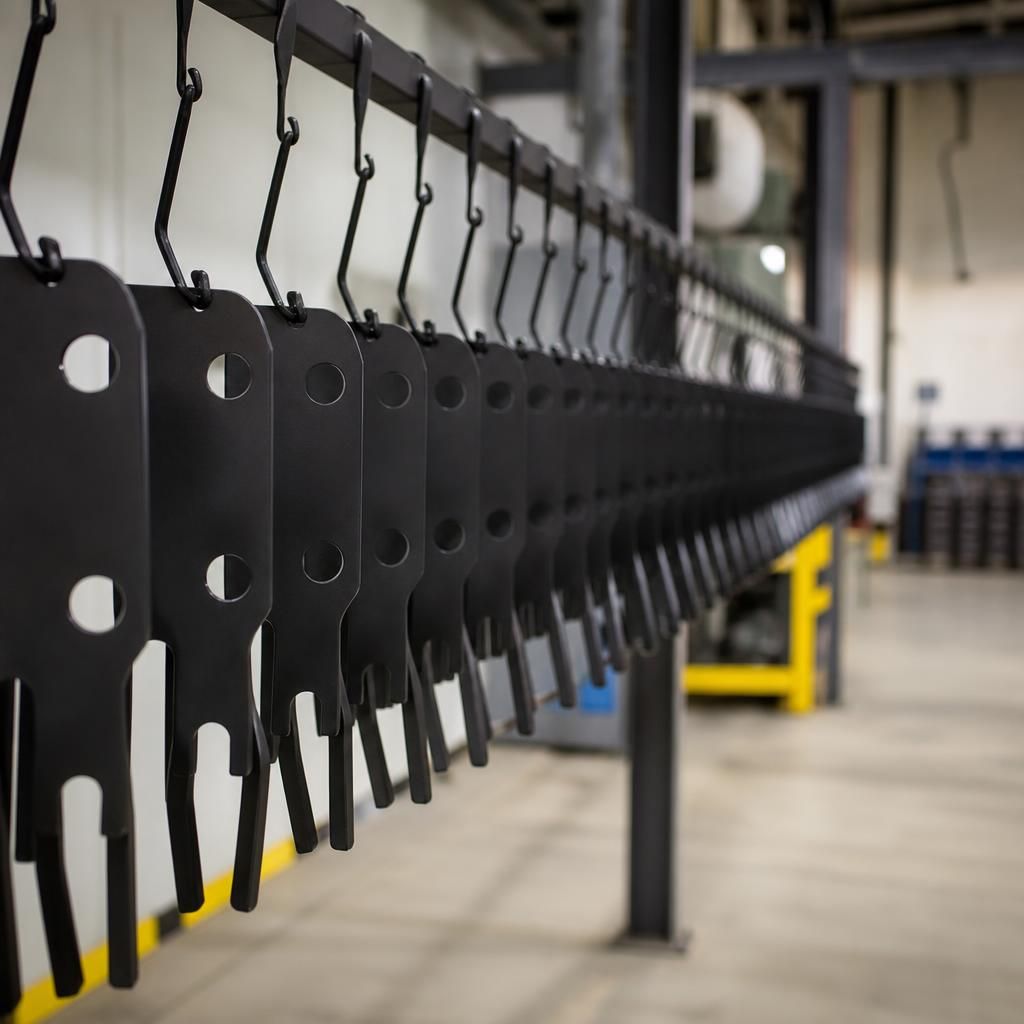
In suitable moving or sliding applications, a nylon coating can contribute to sustainability during the operating phase by reducing surface friction and preventing material from sticking to the component. This may help equipment operate with less resistance and can reduce the need for frequent cleaning or manual intervention, provided the coating is specified for the load, movement, temperature and substances involved.
These benefits depend on the complete system rather than the coating material alone. The mating surface, contact pressure, lubrication requirements and operating speed all affect the result. A coating selected primarily for low friction may be unsuitable where high abrasion, elevated temperature or aggressive chemicals are the dominant risks. Industrial users should therefore assess potential operational benefits alongside application energy, preparation requirements and expected service conditions before selecting a nylon or speciality coating.