

What maintenance is required for epoxy and polyester powder coatings to ensure their longevity?
Maintain epoxy and polyester powder coatings by washing them with mild detergent and clean water, avoiding abrasive tools and harsh chemicals, and inspecting regularly for chips, scratches, corrosion or areas where the coating has lifted. Repair damaged sections promptly using a compatible preparation and coating system; polyester coatings generally need particular attention to UV-related fading outdoors, while epoxy coatings should be protected from prolonged sunlight and harsh weather where possible.
The longevity of epoxy and polyester powder coatings depends on preserving the integrity of the cured film, controlling the conditions around the coated metal and dealing correctly with wear before it reaches the substrate. A suitable maintenance plan should therefore cover the component’s environment, handling, drainage, adjacent materials, records and any future repair or recoating work, rather than relying on cleaning alone.
Match maintenance to the coating’s service environment
Maintenance requirements vary according to whether the coated item is indoors, outdoors, exposed to industrial contaminants, or used in a damp or high-traffic setting. Polyester powder coatings are generally selected for external applications because they offer better resistance to sunlight and weathering than standard epoxy coatings. Epoxy coatings are commonly used where chemical resistance, adhesion and protection from corrosion are more important than long-term exposure to direct sunlight.
Where an epoxy-coated component is installed outdoors, its condition should be managed with particular care because ultraviolet exposure can cause surface chalking, loss of gloss and colour change. These effects may not immediately indicate loss of adhesion, but they can signal that the surface is no longer providing the appearance or weathering performance originally required. If sustained external exposure is unavoidable, the suitability of the original coating system should be reviewed rather than treating cosmetic deterioration as a maintenance defect.
Prevent mechanical damage during use
- Use lifting, storage and handling methods that do not drag coated parts across other metal surfaces.
- Protect edges, corners and drilled openings during assembly, as these areas are more vulnerable to impact and local film damage.
- Do not use the coated surface as a cutting, welding or grinding area unless it is deliberately protected and subsequently restored.
- Where components are moved repeatedly, use suitable pads, separators or non-marking supports to reduce rubbing and point loading.
Powder coating is a protective finish, not a substitute for careful handling or a structural repair. Repeated impact can expose the substrate even when the surrounding coating still appears sound. The risk is higher on thin edges, around fixings and at contact points where movement concentrates force.
Control water retention and contamination
Good installation and housekeeping help prevent problems that maintenance alone cannot correct. Coated assemblies should be positioned so that water, process liquids and debris do not remain trapped against the film or collect inside joints. Drainage holes, vents and gaps should remain clear, while overlapping parts should not create concealed pockets that stay damp for long periods.
Where coated metal is installed near cutting fluids, salts, cement dust, solvents or other industrial contaminants, the maintenance plan should account for the particular substance rather than assuming that every powder coating has the same resistance. Chemical exposure can soften, stain, swell or embrittle a finish, depending on the coating chemistry, concentration, temperature and contact time. The coating specification or technical data should be checked before introducing a cleaning agent, process chemical or sealant.
Pay attention to fixings and adjoining materials
Fasteners, brackets, welds and uncoated cut edges can become local corrosion points even when the main coated area remains intact. During planned maintenance, check that fixings are appropriate for the environment and that damaged protective treatments have not created a route for corrosion beneath the coating. Dissimilar metals may also require suitable separation where moisture is present, as galvanic corrosion can affect the adjoining metalwork.
Sealants, rubber profiles, tapes and plastics should be compatible with the coating. Some materials release plasticisers or chemicals over time, causing staining, softening or loss of adhesion. Compatibility is especially important where a component is exposed to heat, sunlight, cleaning products or movement.
Keep a coating maintenance record
For industrial assets, a simple record can make maintenance more consistent. Record the coating type, colour or finish, substrate preparation, installation location, exposure conditions and any repair materials used. It is also useful to note changes in gloss, colour, adhesion, corrosion around fixings and recurring damage at particular contact points.
This information helps distinguish normal weathering from a process or installation problem. For example, deterioration confined to welds or cut edges may indicate inadequate edge preparation or local contamination, whereas widespread fading may relate to exposure and coating selection. Recurring impact in one area may require a change to the component’s handling or support arrangements rather than repeated touch-up work.
Use a controlled repair and recoating process
Repairs should be based on the full coating system, not simply on colour matching. The damaged area needs to be made sound, clean and suitably prepared, with corrosion removed where necessary. The replacement material should be compatible with the existing powder coating, the substrate and the service environment. A liquid touch-up product may be suitable for a small local area, but it will not automatically provide the same performance, appearance or film build as a correctly applied and cured powder coating.
Extensive damage, widespread corrosion, poor adhesion or a change in service conditions may justify complete stripping and recoating. Before this work, confirm whether the original finish is epoxy, polyester or a hybrid system, and establish whether the proposed preparation method could damage the metal or leave residues. Recoating over an unstable or contaminated film can trap defects and cause premature failure.
Review the maintenance plan when conditions change
A coating may require a revised maintenance approach after a change of location, process, temperature, chemical exposure or cleaning regime. New machinery, altered storage arrangements and increased handling can also introduce damage mechanisms that were not present when the finish was specified. The coating should therefore be assessed against its actual service conditions throughout the life of the component, with repairs and future coating decisions based on evidence from its use.
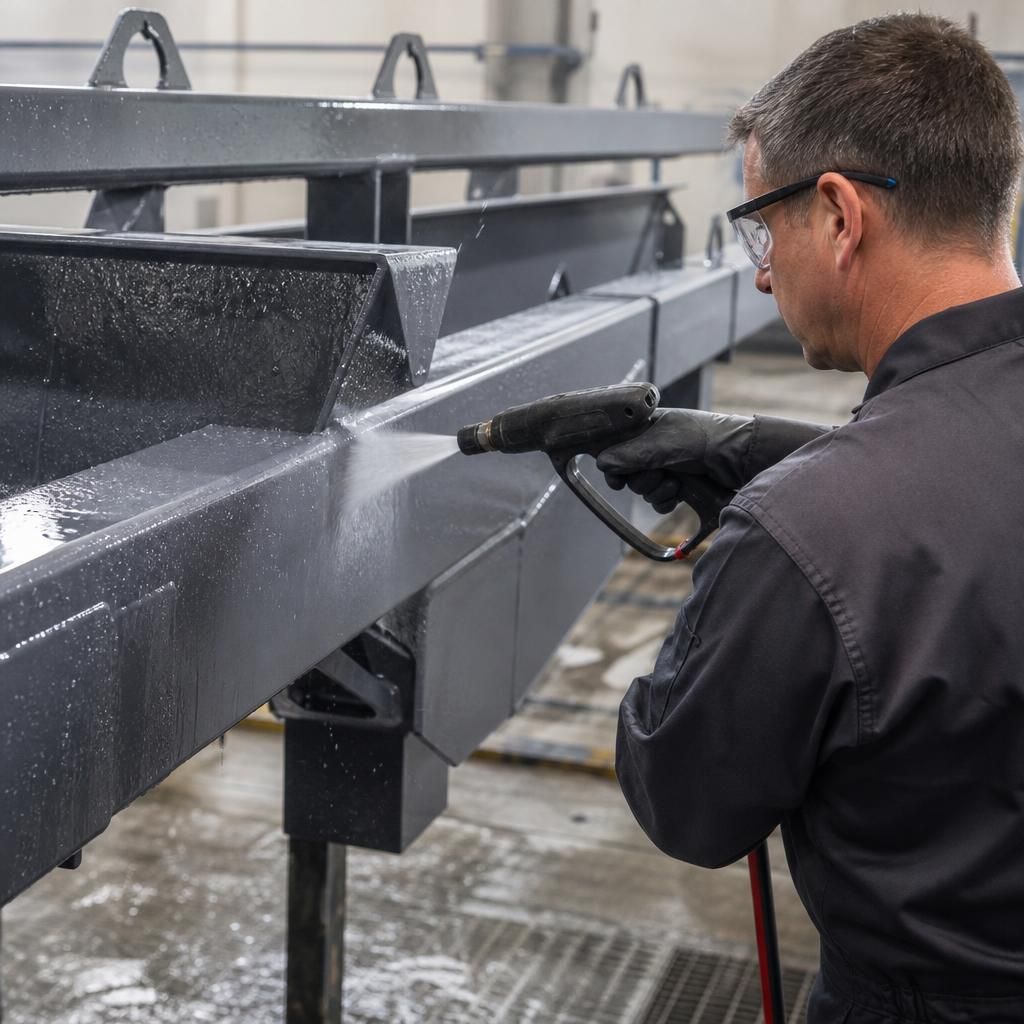
Cleaning should be controlled so that maintenance does not introduce new damage. Allow a recently heated component to cool before washing, use clean equipment that will not transfer metal particles, and rinse away detergent or process residue rather than allowing it to dry on the coating. Any proposed solvent, disinfectant or specialist cleaner should first be checked against the coating manufacturer’s technical guidance and, where appropriate, tested on an inconspicuous area.
Steam cleaning, abrasive blasting and aggressive pressure washing can damage edges, joints and locally weakened areas even when the main film appears sound. If heavier cleaning is necessary, the method should be selected according to the coating condition, substrate and contamination involved. Where cleaning exposes a defect, stop increasing the cleaning force and move to a planned repair assessment instead.
Discuss Maintenance for Your Powder-Coated Components
If you are planning maintenance, repair or recoating, discuss the component’s substrate, existing coating, service environment and cleaning requirements with a powder coating specialist. This information helps establish a suitable preparation and coating system for the component’s intended use.