

What factors should be considered when choosing between zinc phosphate and chromate pretreatments for different metals?
Choosing between zinc phosphate and chromate pretreatment depends on the base metal, required corrosion resistance and adhesion, service environment, powder coating system, process requirements, cost and regulatory constraints. Zinc phosphate is commonly selected for steel and iron, while chromate treatments are often considered for aluminium and some zinc surfaces, subject to environmental controls and confirmation through testing.
The choice between zinc phosphate and chromate is determined by how the pretreatment interacts with the particular substrate, the required coating system and the conditions the finished component will encounter. Zinc phosphate usually produces a crystalline conversion layer suited to ferrous metals, whereas chromate creates a thin conversion coating commonly used on aluminium and some zinc-coated substrates. The correct selection also depends on surface condition, component design, process control, environmental obligations and validation testing.
Identify the exact substrate and its condition. “Steel”, “aluminium” and “zinc” each cover materials with different compositions and surface responses. Carbon steel, galvanised steel, zinc die-castings and aluminium alloys may not behave identically in the same pretreatment line. Alloying elements, casting residues, welding scale, heat tint, existing oxidation and previous coatings can all affect the conversion reaction.
Aluminium presents particular challenges because its naturally formed oxide layer reforms rapidly after cleaning. A compatible chromate conversion process can provide a receptive surface for powder coating while helping maintain protection at areas where the coating film is damaged. Zinc phosphate is more commonly associated with steel, where its crystalline structure can support powder adhesion and provide a degree of additional corrosion resistance beneath the organic coating. On mixed-metal assemblies, each substrate may require a compatible stage or a separately controlled process rather than one universal treatment.
Examine the condition before pretreatment. Pretreatment cannot reliably compensate for heavy rust, mill scale, deep oil contamination, silicone residues or poorly prepared welds. Degreasing, rinsing and any mechanical preparation must expose a consistent metal surface before the conversion stage. Parts with different levels of contamination may receive uneven treatment, leading to variation in powder adhesion and corrosion performance.
Fabrication details also matter. Welds, crevices, folded returns, drilled holes and overlapping joints can retain cleaning chemicals or rinse water. These areas may need drainage holes, suitable orientation, additional inspection or changes to the cleaning sequence. A treatment that performs well on a simple panel may be less suitable for a complex fabricated assembly because solution access and rinsing are more difficult.
Compare the type of protection required. Zinc phosphate generally provides a more substantial conversion layer on suitable ferrous surfaces, while chromate is valued for its performance on aluminium and zinc-based materials despite being comparatively thin. The decision should consider whether the component will face outdoor moisture, condensation, salts, industrial contamination, abrasion or repeated handling before and after powder application.
Protection should not be judged by the pretreatment alone. Powder type, film thickness, edge coverage, cure quality, part design and damage during assembly all influence the finished result. A conversion coating may improve the system’s resistance to underfilm corrosion, but it is not a substitute for a continuous, correctly cured powder coating.
Consider the required appearance and surface profile. Zinc phosphate can leave a visible, textured conversion layer, although the appearance is normally concealed by the powder coating. Excessive or uneven deposition may affect surface uniformity, particularly where the powder film is thin or where a highly consistent decorative finish is required. Chromate treatments are generally thinner and may be less visually apparent, but the treated surface still needs to be clean, evenly converted and free from residues.
Surface profile can influence powder wetting, coverage and the appearance of defects. If a project includes visible architectural or automotive components, sample panels or representative parts should be processed and inspected rather than relying only on the chemical specification.
Review process compatibility. The pretreatment sequence must be considered as a complete process. Typical variables include cleaning chemistry, bath concentration, temperature, contact time, spray pressure, rinse quality, water condition and drying. Zinc phosphate systems may require closer control of crystallisation and sludge, while chromate systems require careful control of bath chemistry and contamination.
Line design is also relevant. A spray system, immersion plant and manual preparation route may deliver different levels of coverage and repeatability. The treatment should reach internal faces and recessed areas without leaving trapped solution. Parts must also be dried appropriately before powder application, because residual moisture or chemical carry-over can cause blistering, poor adhesion or surface defects.
Assess health, environmental and waste requirements. Chromate chemistry requires particular scrutiny because some formulations contain hexavalent chromium, which is subject to strict controls owing to its hazardous properties. Trivalent chromium systems may be available as alternatives, but they should not be treated as automatically interchangeable: their operating conditions, substrate suitability and validation requirements can differ.
Any proposed chromate process should be supported by current safety information, suitable exposure controls, controlled chemical storage and an appropriate waste-treatment route. Zinc phosphate also creates chemical residues and sludge that require managed handling. The relevant decision is therefore not simply the purchase price of the chemistry; it includes equipment, monitoring, operator protection, waste management and documented process control.
Check compatibility with the powder coating system. Pretreatment selection should be assessed alongside the powder resin, primer if used, intended cure schedule and required film performance. The treated surface must remain stable through drying and curing and must not introduce residues that interfere with powder flow, intercoat adhesion or appearance. If a primer, sealant or adhesive will be applied later, its compatibility with the conversion layer should also be confirmed.
Different powder systems may place different demands on the substrate. A specification for a decorative indoor component may not be suitable for a part exposed to persistent moisture or corrosive contaminants. The pretreatment supplier, powder supplier and coating processor should be given the same substrate and performance information so that the complete system is evaluated rather than each stage in isolation.
Use testing to resolve borderline choices. Testing is particularly important for mixed substrates, unusual alloys, castings, repaired surfaces and components with demanding service conditions. Useful checks can include visual inspection of the conversion layer, powder adhesion testing, cure verification and accelerated corrosion testing appropriate to the project specification. Where relevant, testing should include scribed or damaged areas, edges, welds and recessed sections rather than flat panels alone.
Trial parts should be representative of the production component and should pass through the intended cleaning, conversion, rinsing, drying, powder application and curing stages. Results from a flat test coupon may not predict performance on a complex fabrication. Records of bath condition, rinse quality and inspection findings also help identify whether a poor result comes from the chemical choice or from process variation.
Make the decision on total suitability. Zinc phosphate is normally the logical starting point for suitable ferrous components where a robust phosphate conversion layer is required. Chromate is often considered where aluminium or zinc substrates need a compatible conversion treatment, provided the chemistry, legal controls and process arrangements are acceptable. Neither option should be selected solely because it is familiar or has a lower initial chemical cost.
A practical specification should identify the substrate and alloy, preparation standard, pretreatment sequence, powder system, expected service conditions, inspection method and acceptance criteria. This provides a clear basis for comparing alternatives and prevents a treatment designed for one metal being applied indiscriminately to another. For specialist or mixed-metal work, a coating processor can review representative drawings and samples before the production method is fixed.
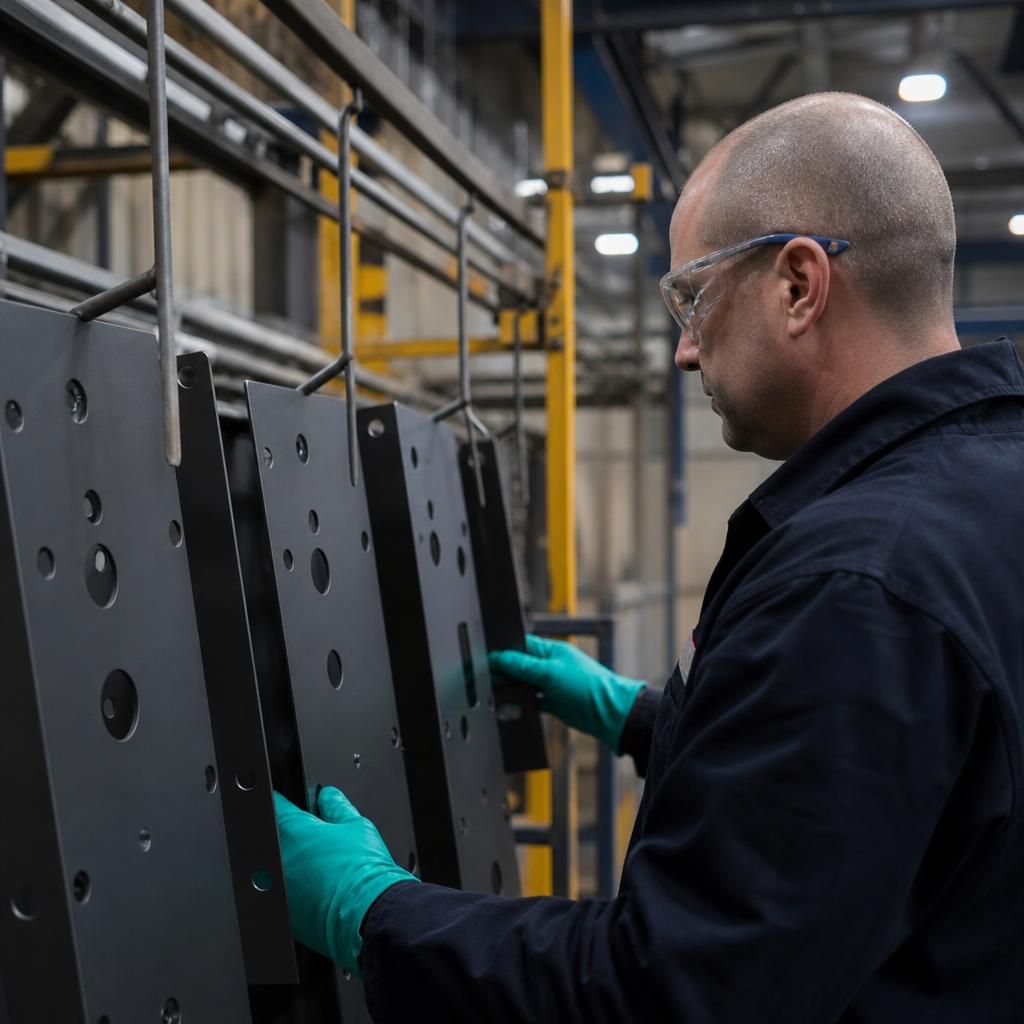
The names “zinc phosphate” and “chromate” do not describe complete pretreatment specifications. Different formulations within each category can be designed for particular substrates, application methods and coating systems. When comparing options, review the supplier’s technical data for the intended alloy, application route, operating conditions, conversion-coating characteristics, rinse stages and compatibility with the powder system.
This distinction is important when replacing an established chemical. A nominally similar treatment may produce a different surface response if its formulation, application method or process window changes. The comparison should therefore be based on representative treated components and documented acceptance criteria, rather than on the chemical name alone. Records should identify the approved product, substrate range and key control requirements so that future process changes can be assessed consistently.