

How does powder coating enhance the durability of aluminium products?
Powder coating enhances aluminium product durability by forming a tough, bonded finish that helps protect the surface from corrosion, abrasion, weathering and everyday handling. When the aluminium is correctly prepared and the coating is suited to its intended environment, it can retain its protective performance and appearance for longer than an untreated surface.
Powder coating enhances aluminium product durability by creating a continuous, cured polymer film over the prepared metal. This film separates the aluminium from moisture, pollutants and physical contact, while providing a stable surface that is less vulnerable to marks, staining and gradual surface degradation than untreated aluminium.
The main durability benefits are:
- Protection against oxidation: Aluminium naturally forms an oxide layer, but contaminants and aggressive conditions can still affect its surface. A correctly applied coating adds a more substantial barrier, reducing the contact between the metal and its surrounding environment.
- Resistance to surface wear: The cured finish helps withstand routine rubbing, handling and contact with adjacent components. This is particularly useful for frames, fabricated parts, panels, housings and other products that are handled during installation or use.
- Improved colour and surface retention: A suitable powder formulation helps the product retain its intended appearance when exposed to light, moisture and changing weather conditions. The right specification is important because not every powder is designed for the same level of exterior or industrial exposure.
- More consistent coverage: Powder is applied as a dry coating and then cured to form an even film. This can provide consistent coverage across broad faces, profiles and formed components, provided the part is correctly racked and the application is controlled.
Durability starts before the powder is applied. Aluminium must be clean and free from oil, dirt, corrosion products and other contaminants that could prevent adhesion. Pretreatment helps condition the surface so the powder can bond effectively. If preparation is inadequate, the coating may lose adhesion, deteriorate prematurely or allow localised damage to spread beneath the film.
Application control is equally important. The coating needs to reach the required areas of the component, including edges, recesses and less accessible surfaces. Part geometry, hanging points and the conductivity of aluminium can all influence how powder is deposited. Correct film build and thorough curing then allow the powder to develop its intended hardness, adhesion and resistance properties. Under-cured or unevenly applied material will not provide the same protection as a properly processed coating.
The service environment should determine the coating specification. An aluminium component used indoors in a clean setting has different requirements from one exposed to rain, condensation, industrial pollutants, road contaminants or frequent handling. The choice of powder, colour, gloss level and pretreatment should therefore be considered alongside the component’s location, exposure and function rather than selected on appearance alone.
Design details also affect the result. Sharp edges, tight corners, drilled holes, joints and areas where water can collect may be more difficult to coat consistently or may experience greater local stress. Good fabrication and drainage design reduce these risks. Where a part includes fasteners, cut edges or interfaces with other materials, those areas should be considered separately because the coating cannot compensate for poor assembly, trapped moisture or mechanical damage.
Powder coating does not make aluminium immune to damage. Deep scratches, impact marks, unsuitable cleaners and prolonged exposure beyond the coating’s specification can compromise the protective layer. Any damage should be assessed and dealt with using a compatible repair approach. Routine cleaning with a mild, non-abrasive method helps remove deposits before they become more difficult to remove and allows the surface to be inspected.
For B2B aluminium products, the practical value of powder coating is therefore a combination of material protection, finish stability and controlled processing. Selecting an appropriate system, preparing the metal properly and applying and curing the powder correctly are all necessary to achieve durable performance. The coating specification should be matched to the product’s design and operating conditions, not treated as a one-size-fits-all finish.
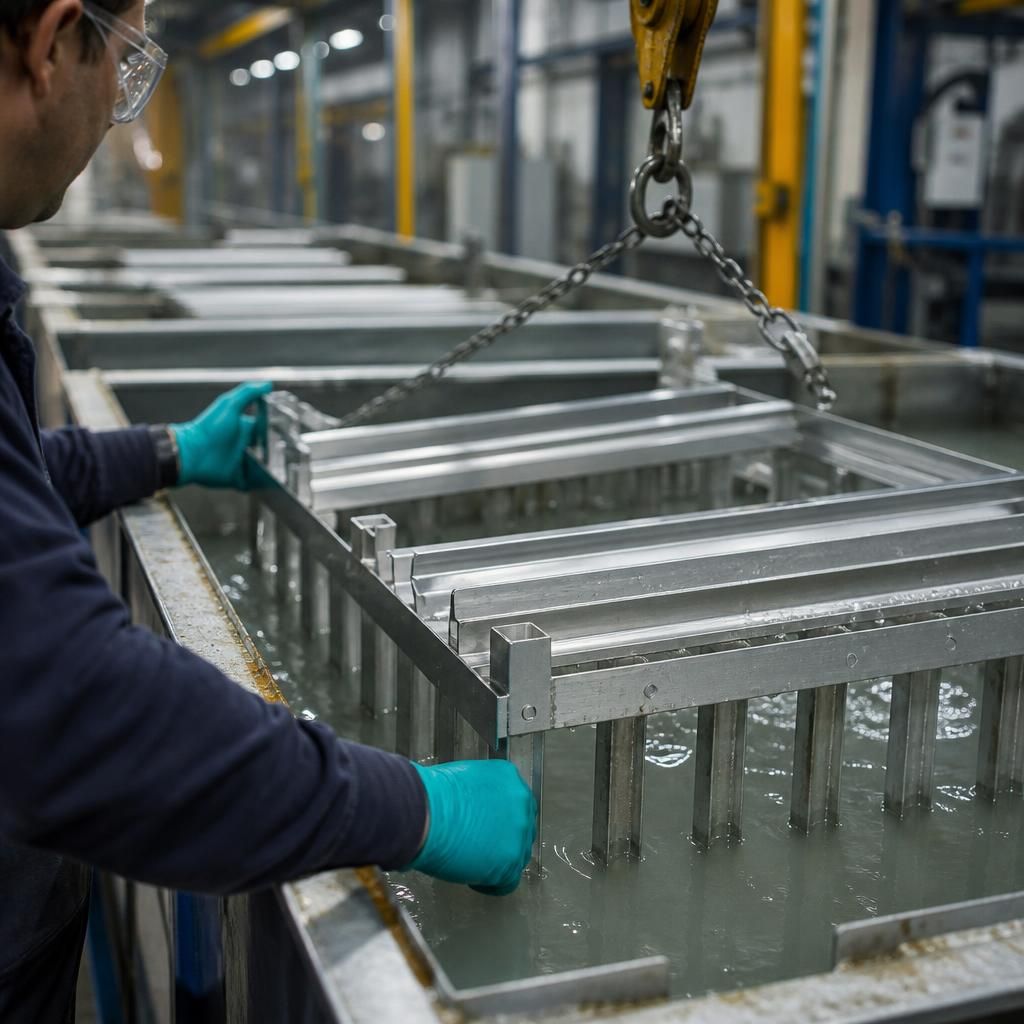
On aluminium, pretreatment forms the critical interface between the metal and the powder coating. A suitable conversion layer conditions the naturally oxide-covered surface, helping the cured film establish a more reliable bond and reducing the risk of moisture reaching the substrate beneath small areas of coating damage.
This is particularly important because aluminium surfaces can carry residues from manufacturing, handling or fabrication that are not always visible. Degreasing and controlled pretreatment remove or manage these contaminants before coating, so the finished product is less likely to develop local adhesion failure, blistering or corrosion beneath the film. The pretreatment must be compatible with the aluminium alloy, product geometry and intended exposure conditions; it is not simply an optional cleaning stage.