

How do high temp powder coatings contribute to corrosion protection in industrial settings?
High temperature powder coatings help protect industrial metalwork from corrosion by forming a cured, continuous barrier that limits contact with moisture, oxygen and corrosive contaminants. When the coating system, surface preparation and cure are suited to the operating conditions, the finish is less likely to break down under sustained heat, helping preserve the metal substrate.
High temperature powder coatings contribute to corrosion protection by maintaining a stable protective film when metal components are exposed to elevated temperatures, repeated heating and cooling, and chemically aggressive surroundings. Their value is not based on heat resistance alone: corrosion performance depends on the complete coating system, including the metal substrate, preparation method, powder formulation, application quality and curing conditions.
Industrial corrosion often accelerates when a finish becomes brittle, softens, loses adhesion or develops microscopic cracking during service. Heat-resistant formulations are selected to retain their physical and chemical properties within the component’s operating range. This helps the coating remain attached to the substrate as the metal expands and contracts, reducing pathways through which corrosive agents could reach exposed steel or other metals.
Thermal cycling is particularly important in applications that repeatedly start, stop, heat up and cool down. A coating that performs adequately at a constant temperature may be less suitable where conditions fluctuate. Repeated movement can place stress on the coating-to-metal interface, especially at edges, welds, joints and changes in section. Correct preparation and an appropriate coating specification help manage these vulnerable areas.
Surface preparation has a direct influence on corrosion resistance. Oil, rust, mill scale, moisture and other contaminants can prevent proper adhesion or remain beneath the coating. Abrasive cleaning, where suitable, creates a clean and suitably keyed surface, while the preparation method must be compatible with the metal and the intended coating system. Galvanised steel, stainless steel and previously coated components may each require different preparation controls.
The coating must also be applied at a suitable and consistent film thickness. Thin areas may provide insufficient coverage, while excessive build-up can affect curing, flexibility or edge performance. Particular attention is needed around corners, apertures, welds and recessed features, where powder coverage and drainage can be more difficult to control. Any damage, pinholes or exposed edges can become local initiation points for corrosion.
Curing converts the applied powder into a continuous finished film and is essential to its protective performance. The relevant condition is the temperature reached by the metal part, together with the time held at that temperature, rather than oven air temperature alone. Insufficient curing may leave the film with reduced adhesion or chemical resistance; unsuitable over-curing can also alter the coating’s properties. Components should therefore be assessed according to their material, geometry and thermal mass.
High temperature powder coatings can support corrosion protection in environments such as:
- heated machinery and industrial equipment;
- engine, exhaust and automotive components where the coating specification permits;
- metalwork exposed to outdoor moisture as well as operational heat;
- fabricated parts used near furnaces, ovens or other heat-producing equipment; and
- components exposed to a combination of heat, abrasion and industrial contaminants.
Heat exposure is only one part of the specification. The correct system must also account for humidity, salt, chemicals, abrasion, direct weathering and any contact with process materials. A coating designed for dry heat may not provide the same protection in a damp or chemically aggressive environment. Where corrosion is a major risk, the substrate, pretreatment and powder should be considered together rather than selecting a product solely from its maximum temperature description.
Design details can affect the result as much as the powder itself. Water traps, unsealed overlaps and inaccessible cavities may retain moisture or contaminants behind the finish. Rounded edges, suitable drainage and clean welds can make it easier to achieve consistent coverage and reduce localised corrosion risks. Parts should also be handled and transported in a way that avoids gouging the cured coating before installation.
For industrial metalwork, assessing corrosion protection therefore involves matching the coating system to the real service conditions. The key information includes the substrate, expected operating and peak temperatures, frequency of thermal cycling, exposure to moisture or chemicals, required appearance and likely mechanical damage. This assessment helps determine whether a high temperature powder coating is appropriate and what preparation, application and curing controls are needed for durable protection.
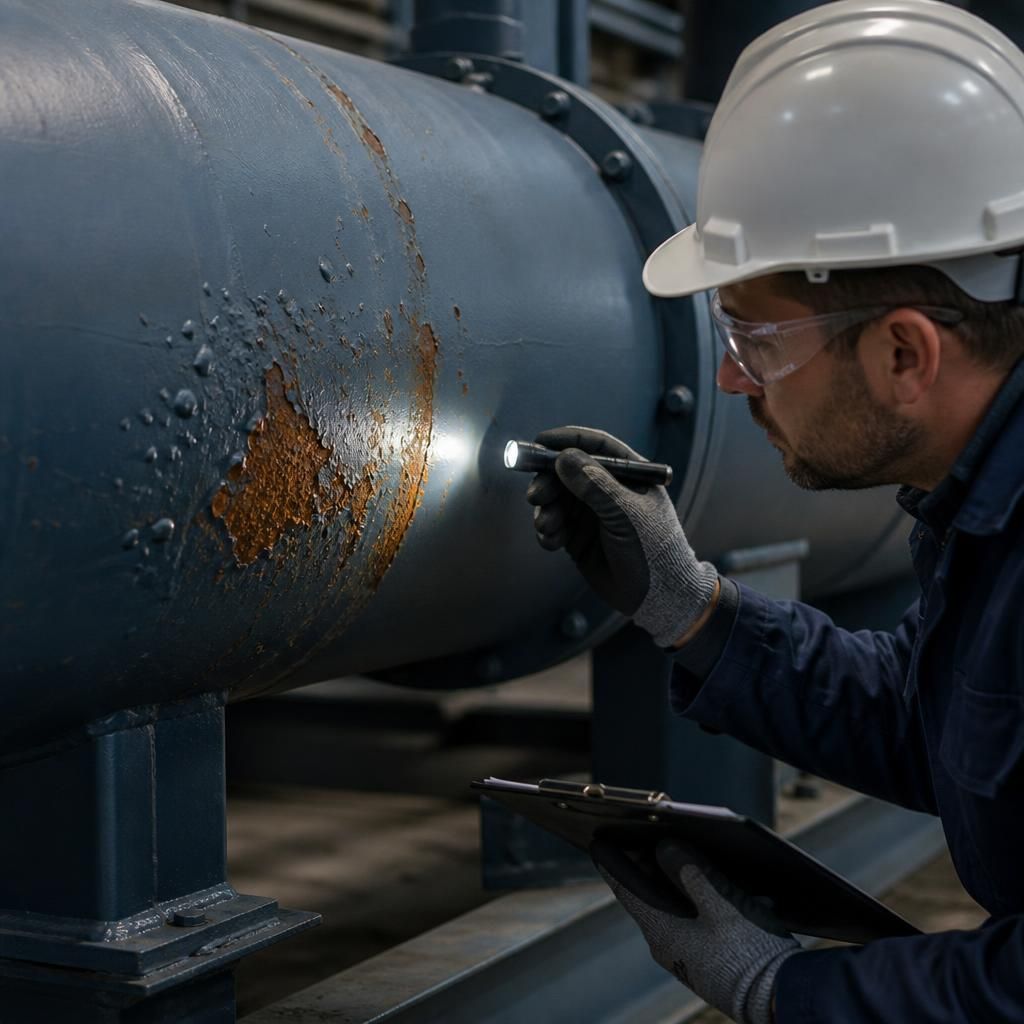
High temperature powder coatings contribute to corrosion protection by providing a surface that can be inspected for early signs of heat-related ageing and coating failure before the underlying metal is extensively exposed. In industrial settings, changes such as blistering, flaking, delamination, rust staining or corrosion spreading from damaged areas may indicate that the coating system is no longer providing continuous protection.
Inspection should distinguish normal colour change or surface dulling caused by heat from defects that expose the substrate. Areas around fasteners, welds, edges and contact points deserve particular attention because mechanical damage and local coating loss can create starting points for corrosion. Recording these changes during planned maintenance helps determine whether local repair, recoating or a review of the specification is needed, supporting longer service life for heat-exposed metal components.