

What are the most effective pretreatment chemicals for specific metal types in powder coating?
The most effective pretreatment depends on the metal: alkaline cleaners and iron or zinc phosphate are commonly used for steel and iron, while zinc-coated steel benefits from controlled cleaning followed by a compatible conversion coating; aluminium usually requires a dedicated cleaner and deoxidiser with a non-chromate or chromate conversion treatment. Zinc, galvanised surfaces and other alloys need carefully selected, substrate-compatible chemistry to remove contamination without attacking the surface and to support adhesion and corrosion resistance.
The most effective pretreatment chemical is determined by the substrate’s composition, surface condition and intended service environment, rather than by the powder coating alone. Stainless steel, zinc die-castings, copper alloys and mixed-metal assemblies each require different cleaning and conversion strategies because their oxide layers and chemical reactivity are not the same.
Stainless steel normally needs thorough removal of oils, handling residue and shop contamination without disturbing its protective chromium-rich oxide layer. A controlled alkaline cleaner is often followed by a suitable activation or conversion stage. Non-chromate systems based on zirconium, titanium or silane chemistry may be selected where the process requires a lower-hazard alternative to conventional chromate treatments. The key requirement is consistent surface activation: an overly mild process may leave poor adhesion, while an aggressive acid treatment can etch unevenly or introduce staining.
Stainless grades also vary in behaviour. Austenitic, ferritic and martensitic grades can respond differently to activation, particularly where the surface contains weld heat tint, scale or embedded iron. Welded fabrications may therefore need localised cleaning or additional descaling before the main pretreatment sequence. Any chemical chosen for stainless should be assessed against the grade, weld condition and required appearance of the finished powder coating.
Zinc die-castings and zinc-rich components require chemistry that removes mould-release agents and grease without excessively attacking the zinc surface. Mild alkaline cleaning, carefully controlled rinsing and a compatible conversion treatment are generally more appropriate than highly aggressive acids. Excessive etching can create a friable or uneven surface and may increase the risk of pinholing, blistering or visual variation after curing. Because zinc die-castings can contain aluminium, copper and other alloying elements, the treatment should be validated against the actual alloy rather than assumed from its appearance.
Copper, brass and bronze need a process that removes tarnish, oil and oxide while controlling the natural tendency of these metals to discolour or re-oxidise. A suitable degreaser may be followed by a carefully selected acid activation or conversion treatment, depending on the alloy and the required corrosion performance. Strong or prolonged acid exposure can cause dezincification in some brasses, change the surface colour or produce an irregular profile. Rinsing and prompt transfer to the next stage are particularly important where the clean surface is vulnerable to rapid tarnishing.
Cast iron and heavily scaled steel present a different problem from clean, lightly oxidised sheet. Moulding sand, graphite residue, mill scale, rust and machining fluids can prevent chemicals from reaching the sound metal beneath. Cleaning chemicals may be effective for oils and loose contamination, but firmly bonded scale often requires mechanical preparation or a suitable descaling stage before conversion treatment. Pretreatment cannot compensate for rust or scale that remains attached to the surface.
Magnesium and specialist alloys should be treated only with a process designed for the specific alloy and coating requirement. These substrates can be highly reactive and may be damaged by general-purpose acidic or alkaline products. Specialist conversion systems may use tightly controlled fluoride, phosphate, rare-earth or other chemistries, but the correct choice depends on the alloy, the component’s design and the required corrosion protection. Trial panels and technical validation are important before processing production parts.
For components made from more than one metal, compatibility becomes the main consideration. A treatment that is suitable for steel may attack aluminium, zinc or copper in the same assembly. Mixed-metal parts may need masking, separate treatment stages, an alternative universal conversion system or a process designed around the least chemically tolerant substrate. Contact between dissimilar metals can also create galvanic effects if residues remain in joints or recesses.
The chemical choice should be assessed alongside the following factors:
- Contamination: machining oils, drawing compounds, fingerprints, weld residues, silicone and protective films may require different cleaning strengths or separate stages.
- Surface condition: rust, mill scale, casting residue, weld heat tint and previous coatings can determine whether chemical cleaning alone is adequate.
- Required protection: an indoor decorative component may need a different conversion system from an external structural part exposed to moisture, salts or industrial pollutants.
- Powder and cure system: the pretreatment must leave a chemically compatible surface and must not deposit residues that interfere with powder adhesion, appearance or curing.
- Component geometry: boxed sections, overlaps, threaded holes and drainage points can retain cleaner or rinse water, making chemical carry-over and corrosion more likely.
- Environmental and handling requirements: chromate chemistry, effluent controls and operator safety need to be considered alongside the performance requirements of the finished component.
Process control is as important as the product selected. Cleaner concentration, temperature, contact time, spray coverage, rinse quality and conversion-stage condition all influence the result. A technically suitable chemical can still produce poor adhesion if the bath is contaminated, the rinses are inadequate or the parts dry before the conversion film is formed. Water quality also matters: dissolved salts left on the surface can contribute to osmotic blistering or underfilm corrosion.
Before approving a pretreatment for production, the treated surface should be checked for uniform coverage, residue, staining and water-break behaviour, followed by powder application and relevant adhesion or corrosion testing. The assessment should use representative parts, including welds, edges, recesses and the most heavily contaminated areas. This confirms that the chemical is effective for the actual metal and manufacturing condition, rather than merely for a clean test coupon.
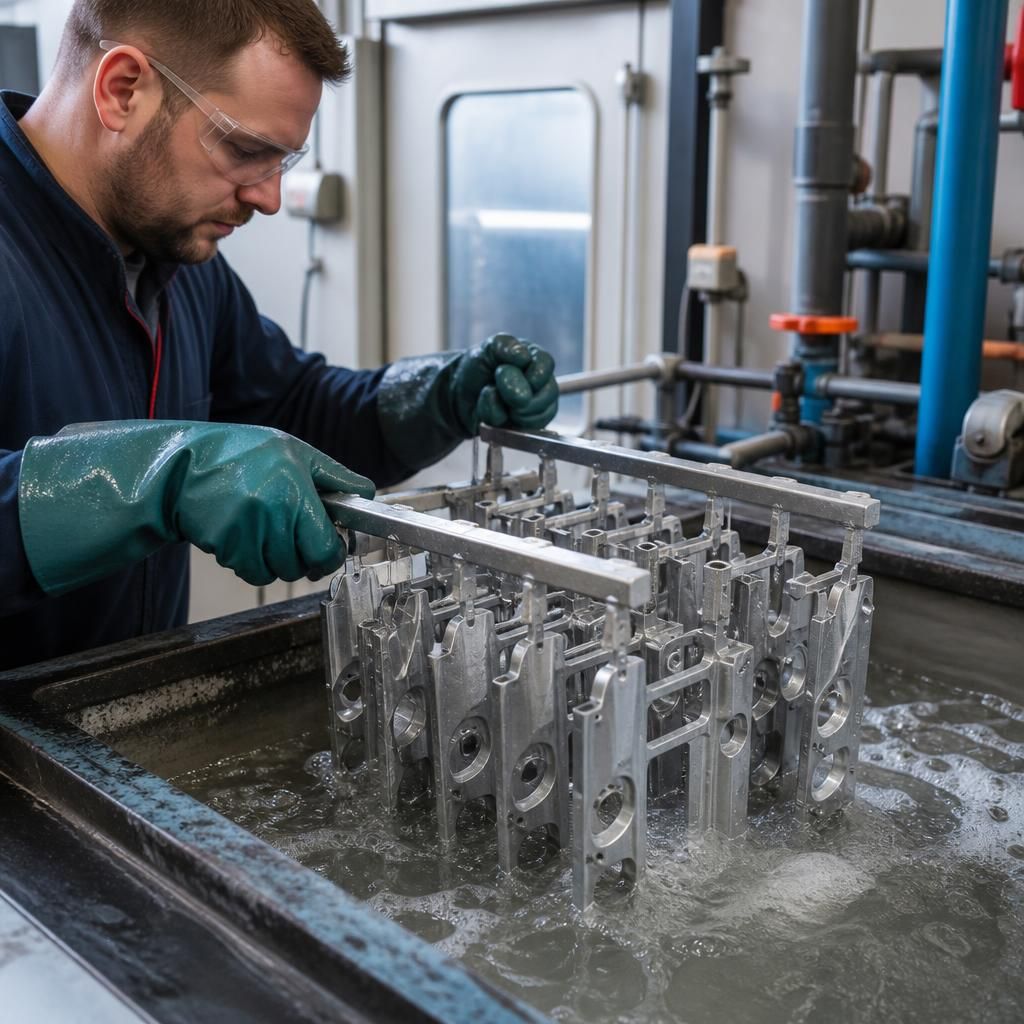
Aluminium requires a controlled pretreatment sequence because its oxide layer reforms quickly after cleaning. The process should remove oils and handling residue, eliminate uneven oxidation or smut, and then leave a consistent conversion layer for the powder coating to bond to. Excessive alkaline cleaning can attack the substrate, while insufficient deoxidising may leave patches that differ in adhesion and appearance.
The correct chemistry also depends on whether the component is wrought aluminium, cast aluminium or an alloy containing significant amounts of silicon, copper or magnesium. Castings may need particular attention to porosity and embedded contaminants, whereas extrusions and sheet can require careful control of surface activation to avoid visible etching. Before production coating, inspect treated samples for uniform wetting, staining and surface variation, then confirm performance on representative parts rather than relying only on a clean test panel.
Discuss the right pretreatment for your metal components
Discuss your metal components, existing surface condition and required finish with Powder-coatings.co.uk to identify a suitable pretreatment approach. The team can advise on the information needed to assess the chemistry and coating process for your parts.