

What are the key steps involved in preparing a metal surface for powder coating?
Preparing a metal surface for powder coating involves inspecting it, removing oil, grease, dirt, rust and existing coatings, then using abrasion or blasting to create a clean, keyed surface. The component is then cleaned and dried thoroughly, chemically pre-treated where appropriate, and masked before powder is applied and cured.
Metal surface preparation for powder coating is a controlled process that makes the substrate chemically compatible, physically receptive and sufficiently clean for the powder film to form a durable bond. The key work is not simply making the metal look clean: it involves selecting a preparation route for the particular substrate, controlling the condition of the surface, preventing recontamination and confirming that it is ready for coating.
1. Establish the preparation specification
Before work begins, the coater should identify the metal type, the intended service environment and the required finish. Mild steel, galvanised steel, aluminium and previously treated components can require different preparation systems. The specification should also account for exposure to moisture, chemicals, abrasion, outdoor conditions and temperature changes, because these factors influence the pretreatment and powder system selected.
Information about fabrication is also important. Welds, joints, folded sections, drilled holes and enclosed areas can retain residues or moisture. Components should be designed or presented so that process chemicals can reach the relevant surfaces and drain away afterwards. Drainage holes may be needed in hollow fabrications, while trapped air or liquid in box sections can affect both pretreatment and curing.
2. Assess the substrate and fabrication quality
Preparation cannot compensate fully for poor fabrication. Weld spatter, sharp projections, burrs, deep scratches and poorly blended welds can remain visible through the finished powder coating or create weak points at edges. These defects should be corrected as part of the fabrication or finishing process. Particular attention is needed at corners and edges, where a coating can become thinner and where corrosion may begin more readily.
Galvanised and zinc-coated materials need additional consideration because their surface condition can vary. White corrosion products, storage staining and uneven zinc layers may affect adhesion. Aluminium may have an oxide layer that requires a suitable treatment, while castings can contain pores that release gas during curing. Where outgassing is a possibility, the preparation and coating approach should be agreed before production rather than discovered after coating.
3. Control the cleaning sequence
Cleaning should be treated as a process with defined stages rather than a single operation. Oils, drawing compounds, handling residue and other films can prevent pretreatment from contacting the metal evenly. A component that appears visually clean may still carry a thin organic residue, so the cleaning method must match the type and amount of contamination present.
After cleaning, the surface should be free from chemical residues as well as visible dirt. Poor rinsing can leave salts or detergent deposits beneath the coating, while inadequate drying can introduce moisture into seams, recesses and threaded areas. Parts should be handled with clean equipment after preparation, since fingerprints, workshop dust and contact with unprepared surfaces can compromise the result.
4. Create a consistent surface condition
Mechanical preparation is selected according to the substrate and the material that must be removed or keyed. The aim is a uniform surface condition, not an unnecessarily aggressive finish. Excessive abrasion can change dimensions, expose inclusions or damage thin sections; insufficient preparation can leave weakly bonded areas. The appropriate method and intensity should therefore be consistent across the whole component, including edges, weld zones and less accessible faces.
Where blasting is used, the abrasive, equipment settings and handling method influence the resulting profile and cleanliness. Abrasive contamination must be controlled, particularly when different metals or coating systems are processed in the same facility. Components should not be left exposed for long periods after preparation, as freshly prepared steel can develop flash rust in damp conditions.
5. Apply substrate-specific chemical pretreatment
Chemical pretreatment can improve the interface between the metal and powder coating by stabilising the surface and helping to inhibit corrosion beneath the film. The chemistry must be suitable for the substrate. A process intended for steel is not automatically appropriate for aluminium or zinc-coated material.
Process control includes maintaining the correct contact time, solution condition, rinsing quality and drying temperature for the chosen system. If a conversion coating is uneven, damaged or contaminated, it may not provide consistent support for the powder film. Primer may also be specified where additional corrosion protection is needed, but its compatibility with the powder coating and the intended curing cycle must be confirmed.
6. Protect areas that must remain uncoated
Masking is part of preparation and should be planned around the component’s function. Threads, bearing seats, electrical contact points, earth points, mating faces and precision-fit areas may need protection. Masking materials must tolerate the curing process and should be applied without trapping contamination at the edge of the masked area.
Racking and contact-point planning are equally important. The component needs a reliable electrical connection during electrostatic application, but contact marks should be positioned where they will not affect assembly or appearance. The hanging arrangement should also allow pretreatment liquids to drain and should prevent components touching one another.
7. Carry out final release checks
Before powder application, the prepared component should be checked for remaining residue, corrosion, moisture, damaged masking and areas that were missed by the preparation process. Depending on the agreed quality requirements, checks may include visual inspection, surface cleanliness assessment, confirmation of pretreatment condition and verification that the part is dry and suitably handled.
For repeat batches, recording the preparation route and checking representative parts helps maintain consistency between production runs. If a component has an unusual substrate, complex fabrication or demanding service environment, a trial part or agreed sample process can help confirm that the selected preparation system is suitable before full production.
For manufacturers and fabricators, supplying accurate details about the metal, fabrication method, previous treatments and operating environment allows a powder coating specialist to choose a preparation sequence that is appropriate rather than relying on a generic process.
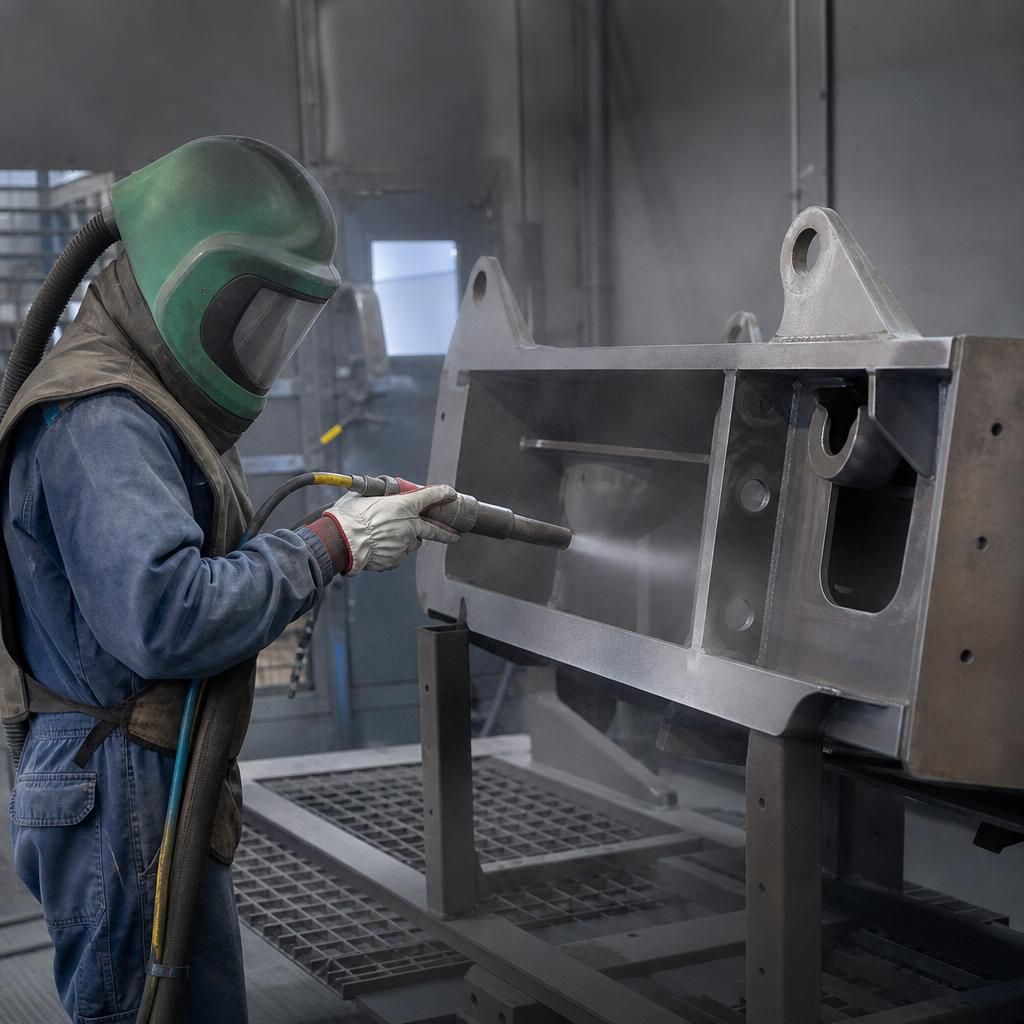
Powder coating adhesion depends on both mechanical keying and chemical compatibility at the metal interface. Abrasion or blasting provides a controlled surface texture, while cleaning and pretreatment remove barriers that could prevent the powder film from bonding evenly. A surface that is merely rough but still contaminated is not adequately prepared.
The preparation method must also suit the component’s thickness, shape and metal type. Overly aggressive treatment can alter fine details or create an uneven profile, whereas insufficient treatment may leave areas where the coating has limited support. Consistent preparation across welds, edges, recesses and broad faces is therefore essential for a uniform, durable finish.