

What specific requirements should be considered when preparing aluminium surfaces for powder coating?
Aluminium must be clean, dry and free from oil, grease, dirt, oxidation and other contaminants before powder coating. Preparation should also account for the alloy and surface condition, use suitable chemical pretreatment or blasting where required, and include careful masking and inspection of areas that must remain uncoated.
Aluminium surface preparation for powder coating must be planned around the alloy, component design, existing surface condition, coating specification and final use. The aim is not simply to make the metal look clean; preparation must create a chemically suitable surface, remove manufacturing defects that could affect adhesion, and ensure the component can be coated, cured and handled without compromising critical dimensions or uncoated areas.
Identify the substrate and its history
The preparation route should be selected after establishing whether the component is wrought, extruded, cast or made from several aluminium grades. Castings may have porosity or residues within the surface, while extrusions can show die lines, handling marks or variations in texture. Previously anodised, painted or otherwise treated aluminium may require a different preparation sequence from newly manufactured material. Details of heat treatment, fabrication and previous exposure should be passed to the coating provider because they can affect how the surface responds to pretreatment and curing.
Where the alloy or existing finish is uncertain, a small trial area or test component can help confirm that the proposed preparation method is suitable. This is particularly useful for mixed batches, reclaimed components and assemblies containing different aluminium grades.
Resolve fabrication defects before preparation
Powder coating follows the shape of the substrate, so it will not hide significant dents, deep scratches, gouges, burrs or uneven grinding. Sharp edges may also receive less coating coverage than broader faces. Deburring, dressing edges and correcting visible surface damage should therefore take place before the preparation stage is finalised.
Welded areas need particular attention. Weld spatter, excessive weld material, porous welds and residues from welding products can lead to surface defects or adhesion problems. Welds should be continuous where the design requires them, and any pinholes or crevices that could retain process liquids should be assessed. Silicone, uncured sealants, adhesive residues and thread-locking compounds should not be present in areas intended for coating.
Account for component geometry
Hollow sections, boxed fabrications, deep recesses and enclosed cavities require more planning than open, accessible faces. Components should allow preparation liquids to reach the relevant surfaces and drain away afterwards. Where a design creates a sealed cavity, trapped air, moisture or process liquid can cause defects during curing or later use. Suitable vent and drain arrangements may be needed, subject to the component’s structural and functional requirements.
Long sections and thin aluminium parts can also be vulnerable to distortion during handling or thermal processing. The coating specification should identify areas that must remain straight, flat or dimensionally controlled, so that the preparation and coating method can be considered alongside the part’s tolerances.
Protect functional surfaces and dimensions
Preparation requirements should be linked to a drawing or written specification. Identify threads, bearing seats, mating faces, electrical contact points, hinge locations, drainage paths and close-tolerance bores that must not receive coating. The required allowance for coating thickness should be considered before production, particularly where parts fit together or slide against one another.
Masking needs to be defined before the components arrive for processing. Suitable plugs, caps or masking materials must withstand the preparation and curing stages without leaving residue or damaging the treated surface. It is also important to define whether a small transition at the edge of a masked area is acceptable, as this can affect the position of seals, fasteners and mating components.
Choose blasting and chemical treatment carefully
Mechanical abrasion can be appropriate for certain aluminium surfaces, but the media and intensity must suit the substrate. An overly aggressive treatment may alter profiles, soften fine detail or leave an unsuitable surface texture. The method should be selected with regard to alloy hardness, component thickness and the appearance required after coating.
Chemical pretreatment should likewise be compatible with both the aluminium and the intended powder system. The treatment sequence, rinsing, drying and handling controls are part of the preparation requirement, not separate considerations. For components exposed to moisture, chemicals or outdoor conditions, the specified pretreatment should reflect the service environment rather than being selected solely for appearance.
Plan racking and contact points
Components need secure support during preparation, application and curing. Racking points should be chosen where a small contact mark will not affect appearance or function. The contact must also allow an effective electrical path during electrostatic application, while avoiding distortion or damage to delicate sections.
For visible components, the likely position of rack marks should be agreed in advance. Parts may need to be oriented so that recesses, corners and internal faces are accessible, and so that liquids do not collect during preparation. Large, awkward or flexible items may require additional support to prevent movement and accidental contact.
Set inspection and acceptance criteria
A suitable preparation specification should state the acceptable surface condition before coating. This may include limits for visible scratches, weld finishing, edge treatment, remaining marks, masked areas and allowable contact points. Colour, gloss and texture requirements should be agreed separately, since the apparent finish can vary with the underlying surface and the geometry of the part.
Before a full batch is processed, it can be useful to inspect a representative component or approve a prepared sample. The review should confirm that the preparation has not affected dimensions, that no prohibited areas have been treated, and that the proposed racking and masking arrangements are practical. Clear drawings, photographs and batch instructions help maintain consistency when components are supplied over multiple production runs.
Finally, prepared aluminium should be protected from handling damage and recontamination before powder application. Components should be transported and stored in a way that preserves the agreed surface condition, with suitable separation between parts where rubbing, marking or contact transfer could occur. Providing complete information about the alloy, fabrication method, service environment, dimensions and no-coat requirements enables a powder coating specialist to select and verify a preparation route appropriate to the component.
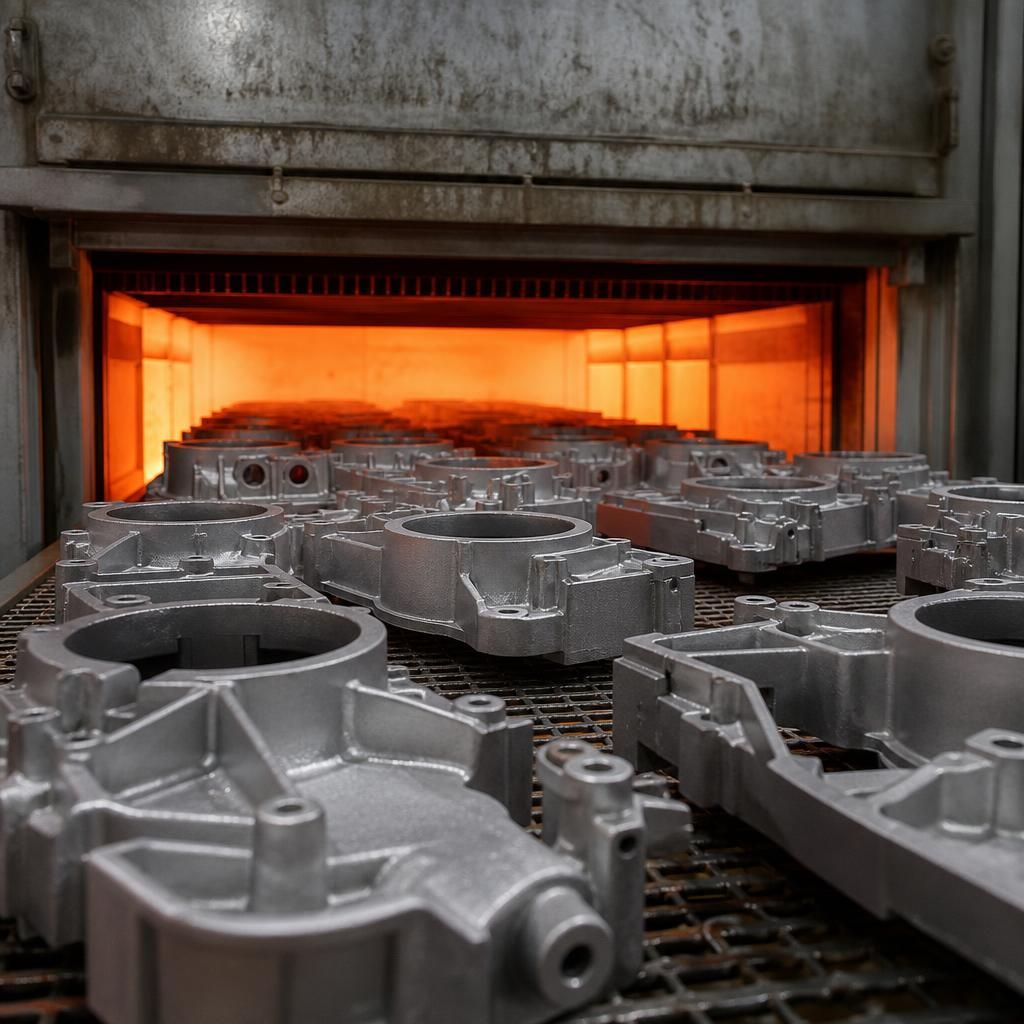
Porous cast aluminium may require outgassing before powder application. Air, moisture or production residues held within the casting can escape during curing, causing pinholes, blisters or small surface defects in the finished film. The preparation specification should therefore identify cast components and assess whether a controlled preheating stage is appropriate before final cleaning and coating. Any visible residue released during this stage must be removed without recontaminating the surface. This requirement is especially important where the finish is highly visible or the component will be exposed to moisture and corrosive conditions.