

What are the benefits of choosing nylon coating over traditional metal finishes?
Nylon coating can offer greater resistance to abrasion, impact, corrosion and chemical exposure than many traditional metal finishes, while also providing a smoother, lower-friction surface. Its resilient, electrically insulating layer helps protect metal components where durability and functional performance matter as much as appearance.
Nylon coating can be preferable to a traditional metal finish when a component needs a tough, compliant polymer surface rather than a purely metallic or paint-based layer. Its main advantage is that it combines surface protection with functional benefits such as cushioning, noise reduction and resistance to marking, making it suitable for metal parts that experience repeated contact, sliding or handling.
Protection against marking and contact damage
Unlike a hard metallic finish, nylon has a degree of resilience. It can absorb local contact forces and help prevent scratching, denting or marking when coated parts touch other components during assembly, transport or use. This is particularly useful for brackets, guides, rollers, housings, fixtures and other fabricated parts where preserving the condition of mating surfaces matters.
The coating can also act as a controlled interface between two components. Rather than allowing metal-to-metal contact, it separates the surfaces with a polymer layer that can accommodate small irregularities and reduce the severity of local pressure points. It should not be regarded as a substitute for correct component design or surface preparation, but it can provide useful tolerance where parts are repeatedly handled or brought into contact.
Lower noise and vibration transfer
Nylon is less rigid than most metal finishes, so it can help dampen the noise created when coated components strike, slide against or rest on other parts. This can be valuable in guards, chutes, handling equipment, machine fixtures and production-line components. The degree of noise or vibration reduction depends on the coating thickness, the component design, the contact forces and the operating environment; it is a functional benefit to assess rather than an automatic result.
A practical surface for moving and mating parts
A nylon surface can help components move against one another without the harsh contact associated with uncoated metal. This may support smoother operation in guides, bushings, rollers and wear-facing parts, provided the coating is matched to the load, speed and operating conditions. The correct formulation and application method are important because excessive pressure, heat or unsuitable counter-surfaces can still cause wear.
Compared with some traditional finishes, nylon can also provide a less abrasive interface for parts that must be handled, positioned or repeatedly assembled. This can protect both the coated component and the surface it contacts. The design should allow for the coating’s thickness so that clearances, threads, slots, bearing fits and other critical dimensions remain suitable after finishing.
Improved handling and component protection
The softer, non-metallic surface can make coated parts easier to handle without creating sharp or harsh contact points at every interface. It can help protect adjacent painted, machined or finished surfaces from direct metal contact during storage and assembly. For batch-manufactured components, this can be particularly useful where parts are stacked, nested or moved through several production stages.
Nylon is available in finishes that can support both functional and visual requirements. Colour and surface appearance may help distinguish components, identify equipment areas or produce a consistent finish across a batch. These choices should be treated as part of the specification rather than assumed to have identical performance, since the selected nylon system and application conditions influence the final result.
Where nylon coating is more suitable than a traditional finish
- Components need a compliant contact surface rather than a hard metallic surface.
- Parts are prone to scuffing or marking during assembly, handling or repeated contact.
- Noise from metal-to-metal contact is an operational concern.
- The component requires a functional polymer interface for sliding, guiding or supporting another part.
- A consistent coloured or non-metallic finish is useful alongside the protective function.
- The coating must provide separation between a metal component and its mating surface.
Important limitations when making the comparison
Nylon is not automatically the best alternative to every traditional metal finish. Its suitability depends on temperature, loading, contact pressure, movement, chemical exposure, moisture, required thickness and dimensional tolerances. Nylon can absorb moisture, and this may affect its dimensions or mechanical behaviour in some conditions. High-temperature applications, precision fits and environments with aggressive chemicals therefore require specific assessment rather than a general assumption that nylon will outperform a metallic finish.
Surface preparation is equally important. Oil, scale, contamination, unsuitable existing finishes or poor adhesion can undermine the performance of any coating. The metal substrate normally needs to be prepared to the required standard, and the application process must produce consistent coverage without interfering with threads, apertures or mating faces. For parts with demanding requirements, the specification should identify the service conditions and the areas that must remain uncoated.
In practical terms, the choice should be based on the job the finish must perform, not simply on the coating’s purchase price or appearance. Nylon is often a strong option where cushioning, controlled contact, noise reduction and resistance to handling damage are priorities. A traditional finish may remain preferable where the component operates at elevated temperatures, requires very tight dimensional control or needs a hard metallic surface. Comparing these factors at the design stage helps identify whether nylon’s functional advantages justify its use for the particular metal component.
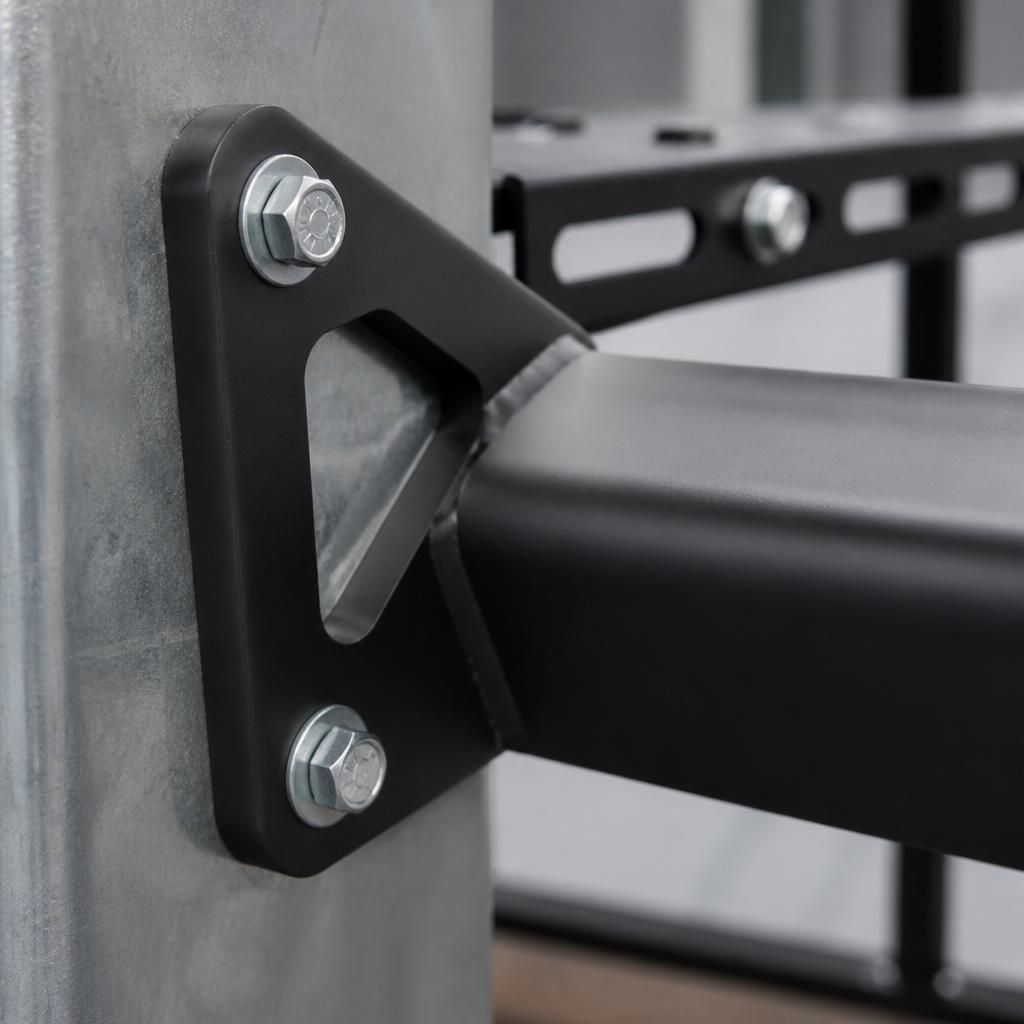
Electrical separation without a separate component
One benefit of nylon over a conventional conductive metal finish is that it creates an electrically insulating barrier around the metal substrate. This can help separate a coated part from adjacent conductive surfaces, reducing the likelihood of direct electrical contact in fixtures, brackets, guards and equipment housings.
The insulating performance depends on the nylon system, coating thickness, continuity and service conditions. Areas requiring defined dielectric performance should therefore be specified and tested accordingly, with uncoated edges, fasteners and damage points considered as part of the design.
Discuss whether nylon coating suits your components
Discuss your component’s operating conditions, dimensional requirements and intended use with the powder-coating.co.uk team to assess whether nylon coating is a suitable alternative to a traditional metal finish. Request a coating recommendation and quotation for your parts.