

What is the powder coating primer process?
The powder coating primer process involves preparing the metal, applying a compatible primer powder, and curing it before applying the final powder coat. The primer creates an additional protective layer that can improve adhesion, corrosion resistance and the durability of the finished coating.
A powder coating primer process uses a specially formulated powder layer beneath the visible topcoat to improve the coating system’s performance on a prepared metal component. It is selected as part of the complete coating specification, rather than treated as a universal extra stage, because the correct primer depends on the substrate, service environment, topcoat and required level of protection.
1. Establishing the coating specification
Before processing begins, the coater assesses the metal type, component design and intended use. Steel, galvanised steel, aluminium and previously coated parts can each require different preparation and primer choices. Factors such as external exposure, moisture, chemicals, abrasion, operating temperature and contact with other materials influence whether a primer is appropriate and which formulation should be used.
The specification should also define the appearance and performance requirements for the finished system. This includes the topcoat type, colour, gloss level, acceptable film build, areas that must remain uncoated and any masking requirements for threads, bearing faces, electrical contact points or mating surfaces.
2. Preparing the component for primer
Contamination must be removed before powder is applied. Oils, grease, dust, mill scale, corrosion products, weld residue and handling marks can interfere with the primer’s contact with the metal. Depending on the component, preparation may involve chemical cleaning, abrasive blasting, mechanical treatment or a combination of methods.
Edges, corners, welds and recessed areas need particular attention. Sharp edges can receive a thinner layer than broad faces, while recesses may be difficult to coat evenly. Weld spatter and fabrication residue can remain visible through the finished coating or create points of early failure if they are not dealt with beforehand. The component must also be thoroughly dry, since trapped moisture or cleaning residue can affect application and curing.
3. Applying the powder primer
Powder primer is normally applied using electrostatic spray equipment. The powder particles are charged as they pass through the spray gun and are attracted to the earthed metal component. Application settings are adjusted to achieve an even deposit without excessive build-up, back-ionisation or poor coverage in difficult areas.
Good application practice includes:
- using a clean, correctly earthed component and sound powder-handling equipment;
- applying the material consistently across faces, edges and relevant recesses;
- avoiding contamination from other powders or incompatible materials;
- controlling the deposited film so that the primer does not interfere with the fit of assembled parts; and
- checking that masked areas remain clear and that required contact points have not been covered.
Primer coverage is especially important around edges, welds, joints and areas likely to experience impact or moisture ingress. A heavier deposit is not automatically better: excessive thickness can affect appearance, dimensional tolerances and the way the topcoat flows.
4. Gel, cure and intercoat handling
The primer is heated so that the powder melts, flows and develops the required film properties. Depending on the coating system, it may be fully cured or taken to a controlled gel stage before the topcoat is applied. The correct treatment is determined by the primer and topcoat manufacturer’s technical requirements, the component’s mass and geometry, and the oven conditions.
After this stage, the surface must be kept clean and protected from damage. The interval between primer treatment and topcoat application matters because dust, handling marks or moisture can affect the next layer. If the primer has been fully cured, the surface may also need checking to confirm that it is suitable for overcoating. Any required abrasion or re-preparation must be controlled so that the primer is not removed from vulnerable areas.
5. Applying and curing the topcoat
The final powder is applied over the primed surface, with attention to the same issues of coverage, masking and film consistency. The complete coating system is then heated under the specified conditions so the topcoat develops its intended finish and bonds correctly with the layer beneath it.
Oven performance is important because the relevant temperature is the temperature of the metal, not simply the setting shown on the oven controls. Component thickness, shape, loading and position can affect how heat reaches the workpiece. Inadequate treatment can leave the coating underdeveloped, while excessive heat may affect colour, gloss or the properties of the substrate and coating.
6. Inspection of the finished system
Inspection normally covers visual appearance, coverage, masking, colour and surface defects. Depending on the specification, further checks may include film thickness, adhesion, cure and resistance to the conditions the component is expected to face. The inspection should consider the coating as a complete system rather than judging the topcoat alone.
Common defects associated with primer processing include pinholes, craters, poor edge coverage, inclusions, uneven texture and areas where the topcoat has not bonded properly. Possible causes include contamination, moisture, incompatible materials, unsuitable application settings, incorrect film build or inadequate oven treatment. Identifying the cause is more useful than simply recoating the affected area, as the underlying problem may otherwise remain.
When is a primer process appropriate?
A primer is often considered where the component needs additional protection or where the substrate and service conditions make a single coat less suitable. It may be unnecessary for some applications, particularly where the selected powder is designed to provide the required performance as a single layer. Adding primer can also affect cost, processing time, dimensions and the appearance of the finished part, so it should be justified by the coating specification.
For manufactured and fabricated metal components, the most reliable approach is to agree the substrate, preparation standard, primer, topcoat, curing method and inspection requirements before production. This avoids selecting a primer in isolation and helps ensure that each layer is compatible with the next stage of the powder coating process.
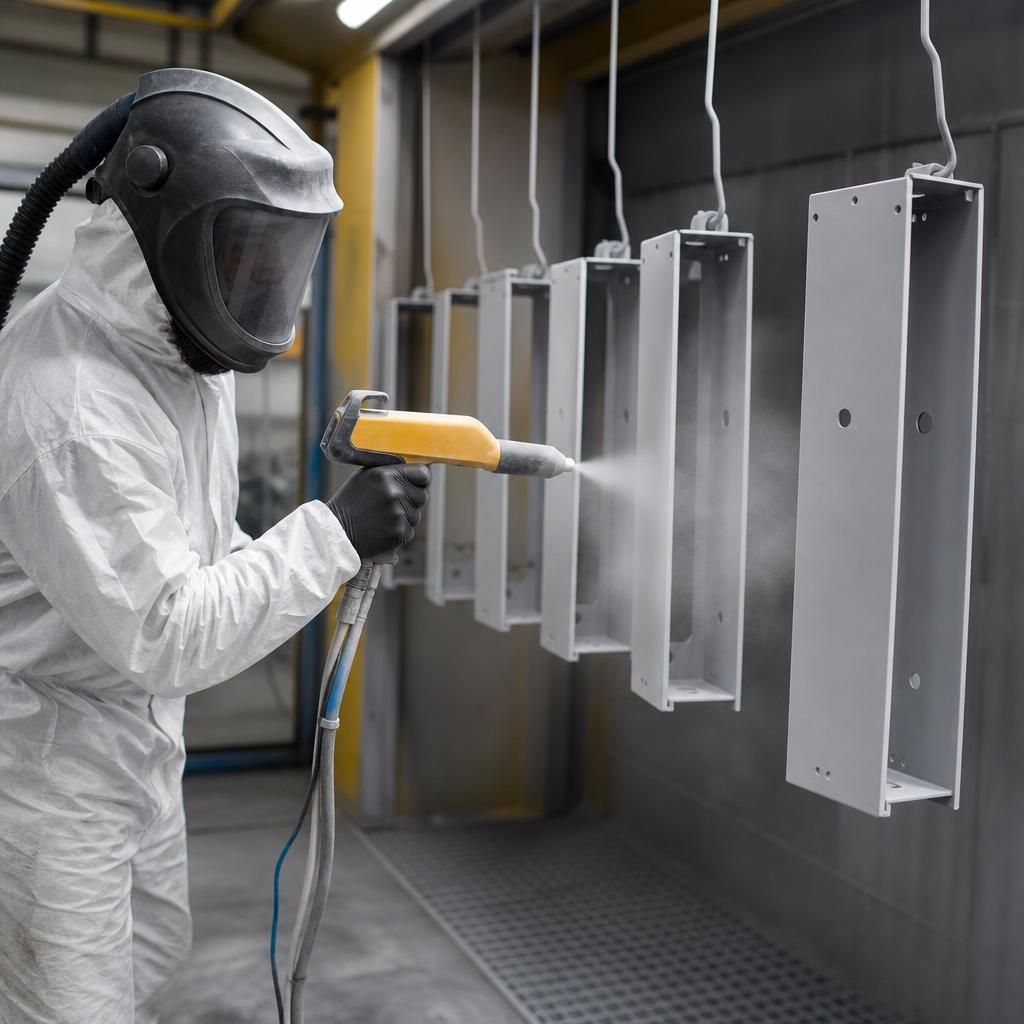
A powder primer is a coating layer, not a replacement for surface pretreatment. Pretreatment removes contamination and conditions the metal so the coating system can bond effectively; the primer then adds a formulated layer beneath the topcoat. Keeping these stages distinct is important because applying primer over grease, oxidation, moisture or cleaning residue can trap the defect beneath the finished system rather than correcting it.
The primer and topcoat should therefore be assessed as a compatible pair. Their chemistry, intended film build and curing requirements must work together, particularly where the component will face moisture, chemicals or mechanical wear. A primer process is most useful when it addresses a defined performance requirement, rather than being added automatically to every powder coating specification.