

What are the advantages of using abrasive blast cleaning before applying powder coatings?
Abrasive blast cleaning removes rust, mill scale, previous coatings and surface contaminants while creating a suitable profile for the powder coating to grip. This improves adhesion, finish consistency and resistance to premature coating failure, helping protect steel components in demanding industrial environments.
Abrasive blast cleaning provides a controlled, uniform substrate for powder coating by removing tightly bonded corrosion, mill scale, old coatings and embedded contamination before the coating system is applied. Its main advantages are better control of the steel’s condition, reduced risk of corrosion developing beneath the coating, more reliable coverage of complex areas and a sounder basis for inspection and quality control.
It removes contamination that simpler cleaning may leave behind. Oil, grease, dirt and loose corrosion can often be removed by degreasing or mechanical cleaning, but mill scale, oxidation and firmly attached residues require a more aggressive preparation method. Abrasive blasting exposes the actual steel surface, allowing the coater to identify pitting, laminations, weld contamination or other defects that could otherwise remain hidden beneath the powder coating.
It reduces the risk of under-film corrosion. Residual rust and mill scale can contain active corrosion sites. If these remain beneath a coating, moisture may gain access through a chip, cut edge or small defect and corrosion can spread under the surrounding film. Removing these materials before coating helps ensure that the powder system is applied to a more stable base. This is particularly important for steel components used outdoors, in humid conditions or in industrial environments where contamination and moisture are present.
It prepares difficult areas more effectively. Blast cleaning can reach many profiles, recesses, corners and welded areas that are difficult to prepare evenly by hand. The effectiveness still depends on the component’s design, the blasting equipment, the abrasive selected and the operator’s technique. Deep blind recesses, narrow gaps and shielded surfaces may require specific attention because abrasive and dust may not reach them uniformly.
It supports a more repeatable coating process. Powder coating performance depends partly on the condition of the surface presented to the coating line. A defined blasting procedure can make preparation more consistent between batches, provided that key variables are controlled, including:
- the type and condition of the abrasive;
- air pressure, nozzle distance and blasting angle;
- the cleanliness and roughness of the prepared steel;
- the time between blasting and powder application; and
- protection from new dust, handling contamination and flash rust.
This control is valuable for manufacturers and fabricators processing repeat components, because variations in preparation can lead to variations in coating performance even when the same powder is used.
It makes surface inspection more meaningful. Once corrosion, scale and previous coatings have been removed, the steel can be examined before the next stage. Inspectors can check for visible defects, confirm that difficult areas have been treated and assess whether the surface is suitable for the specified coating system. Depending on the project requirements, checks may include visual comparison with an agreed preparation standard, assessment of surface roughness and verification that the surface is free from dust or other residues.
It helps establish the right preparation level for the service environment. Not every component requires the same degree of preparation. A lightly used indoor item may have different requirements from structural or industrial steel exposed to weather, condensation, chemicals or abrasion. The preparation specification should therefore be considered alongside the steel grade, component geometry, intended environment, powder system and expected service life. More demanding conditions generally require tighter control of both preparation and coating application.
It can be preferable to relying on an existing coating. Applying new powder over an old finish may conceal weak areas, incompatible materials or corrosion beneath the surface. Removing the previous coating allows the new system to be selected and applied with better knowledge of the substrate. However, abrasive blasting is not suitable for every component without adjustment: thin sections, delicate details and surfaces that could deform or become excessively rough need an appropriate abrasive and carefully controlled technique.
After blasting, the prepared steel should be handled carefully and coated without unnecessary delay. Clean gloves, suitable storage and protection from moisture help prevent recontamination or flash rust. Powder coating should then follow the agreed preparation specification, with particular attention to edges, welds, joints and areas that are difficult to cover. Abrasive blast cleaning is therefore not simply a cosmetic step; it is a controlled part of the steel protection system that improves substrate assessment, corrosion control and process reliability before powder is applied.
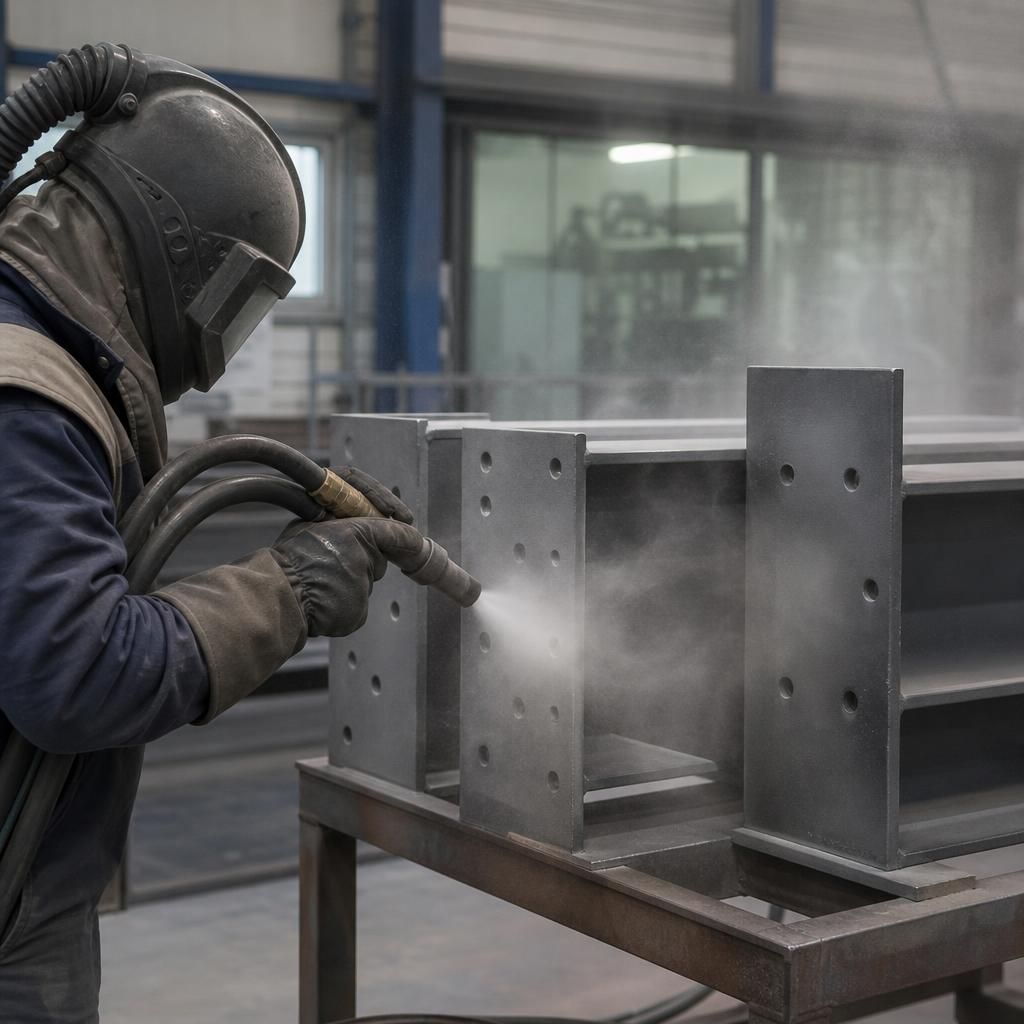
Abrasive blast cleaning does more than make steel look clean: it creates a controlled surface profile for the powder coating to engage with. This profile provides a more consistent interface between the steel and the cured coating than a smooth or unevenly prepared surface.
The profile must be appropriate to the coating system and component. If it is too shallow, the coating may have less opportunity to form a strong bond; if it is excessively rough, peaks may receive less effective coverage and the finish can become uneven. Controlling this balance is a key advantage of professional blast preparation, particularly where consistent coating performance and appearance are required across batches of metalwork.
Discuss abrasive blast cleaning for powder coating
Discuss your steel components and service environment with powder-coatings.co.uk to establish whether abrasive blast cleaning is appropriate before powder coating. The team can advise on preparation requirements and collection or delivery options for projects across the Midlands.