

What is the process for maintaining powder-coated aluminium surfaces?
Maintaining powder-coated aluminium involves regular gentle cleaning, prompt removal of contaminants and inspection for chips, scratches or areas of coating damage. Use a mild detergent with clean water and a soft cloth or sponge, avoid abrasive tools and harsh chemicals, and arrange suitable repairs if the coating is breached.
Maintaining powder-coated aluminium is a planned process of inspection, condition monitoring and timely repair. The objective is to keep the coating intact, prevent local damage from developing into corrosion, and ensure that adjoining components, fixings and drainage arrangements do not undermine the finish.
1. Establish a maintenance schedule
The required frequency depends on the component’s location and exposure. Aluminium installed in sheltered conditions generally requires less frequent assessment than material exposed to coastal air, industrial pollution, road salt, moisture retention or heavy handling. Maintenance planning should therefore consider:
- the level of airborne contamination and moisture;
- contact with salts, chemicals or construction materials;
- the likelihood of impact, abrasion or repeated handling;
- how easily the component can be inspected; and
- the consequences of coating failure on the surrounding assembly.
For commercial and industrial assets, inspection findings should be recorded against the component or installation. This creates a useful condition history and helps distinguish isolated accidental damage from a recurring issue.
2. Inspect the coating and surrounding assembly
Look for changes in the coating’s condition rather than relying only on its colour or general appearance. Relevant signs include lifting edges, blistering, flaking, cracking, unusual staining, loss of gloss, exposed aluminium and corrosion around cut edges or fixing points. Pay particular attention to joints, corners, folded sections, drilled holes and areas where water or debris can collect.
Inspection should also include the surrounding installation. Blocked drainage paths, failed seals, trapped moisture and incompatible contact with other metals can create problems at the interface with the coating. Loose fixings or movement between connected parts may produce rubbing that gradually wears through the finish.
3. Remove the cause of any defect
A damaged area should not simply be covered without identifying why the coating has failed. For example, recurring abrasion may result from movement, an incorrectly positioned fastener or contact with a rough adjoining surface. Corrosion near a joint may be associated with water retention or a failed seal. Resolving the underlying cause is necessary to prevent a repair from deteriorating again.
Where components are exposed to chemical contamination, the source and compatibility of that substance should be reviewed. Solvents, alkaline materials, cement residue, aggressive industrial deposits and some sealants can affect a powder-coated finish if they remain in contact with it or are unsuitable for use alongside the coating.
4. Deal with minor damage promptly
Small chips and scratches should be assessed before they become larger areas of exposed metal. A suitable touch-up or local repair system must be compatible with the existing powder coating, the aluminium substrate and the exposure conditions. The repair area normally needs controlled preparation so that loose material and contamination are removed without unnecessarily enlarging the defect.
Touch-up products are not automatically equivalent to the original factory-applied coating. Differences in texture, gloss and weathering may remain visible, particularly on prominent surfaces. For extensive damage, repeated failures or areas where appearance and protection are both critical, removal and professional recoating may be more appropriate than repeated local repairs.
5. Check edges, fixings and contact points
Edges and apertures can be more vulnerable than broad, uninterrupted faces because they experience cutting, drilling, handling and contact with fasteners. During maintenance, check that exposed edges are not being damaged by installation movement and that fixings have not created points of abrasion. Where dissimilar metals meet, the design should limit moisture retention and prevent damaging contact where necessary.
Sealants and gaskets should remain properly positioned and in sound condition. A failed seal can allow moisture behind or beneath the coating, while a deteriorated gasket can permit movement that causes rubbing. Any replacement material should be confirmed as suitable for contact with powder-coated aluminium.
6. Use appropriate cleaning methods for the environment
Cleaning forms part of maintenance because deposits can hold moisture against the coating or contain substances that attack the finish. The method should be selected according to the contaminant and the coating manufacturer’s care guidance. Do not allow cleaning residues to dry on the surface, and ensure that deposits are not spread into joints, drainage openings or concealed interfaces.
Pressure, temperature and chemical concentration are important controls where equipment is used. Excessive pressure can force water into joints or damage a weakened area, while an unsuitable chemical can alter the coating even when no immediate mark is visible. If there is uncertainty about a product, its compatibility should be checked on an inconspicuous area or with the coating supplier before wider use.
7. Assess damage before arranging recoating
A proper assessment should establish the extent of coating failure, the condition of the aluminium beneath it and whether the item can be treated in place or needs to be removed. Recoating typically requires the existing surface to be stripped or otherwise prepared, followed by suitable preparation of the aluminium and application of a compatible coating system. The specification should take account of the component’s use, exposure and required appearance rather than treating all repairs as identical.
Where the coating has only cosmetic wear and the substrate remains sound, a local treatment may be suitable. Where there is widespread adhesion loss, corrosion, deep mechanical damage or contamination that cannot be adequately removed, a full refurbishment is more likely to provide a dependable basis for the new finish.
8. Keep maintenance records
Records should identify the inspection date, component location, observed defect, likely cause, action taken and any follow-up required. Photographs can help track changes over time. It is also useful to note cleaning products, repair materials and replacement sealants used, particularly where several contractors or maintenance teams work on the same installation.
This information supports planned intervention instead of reactive repair. It can also help a coating specialist determine whether the appropriate response is a local touch-up, remedial preparation or complete recoating of the aluminium component.
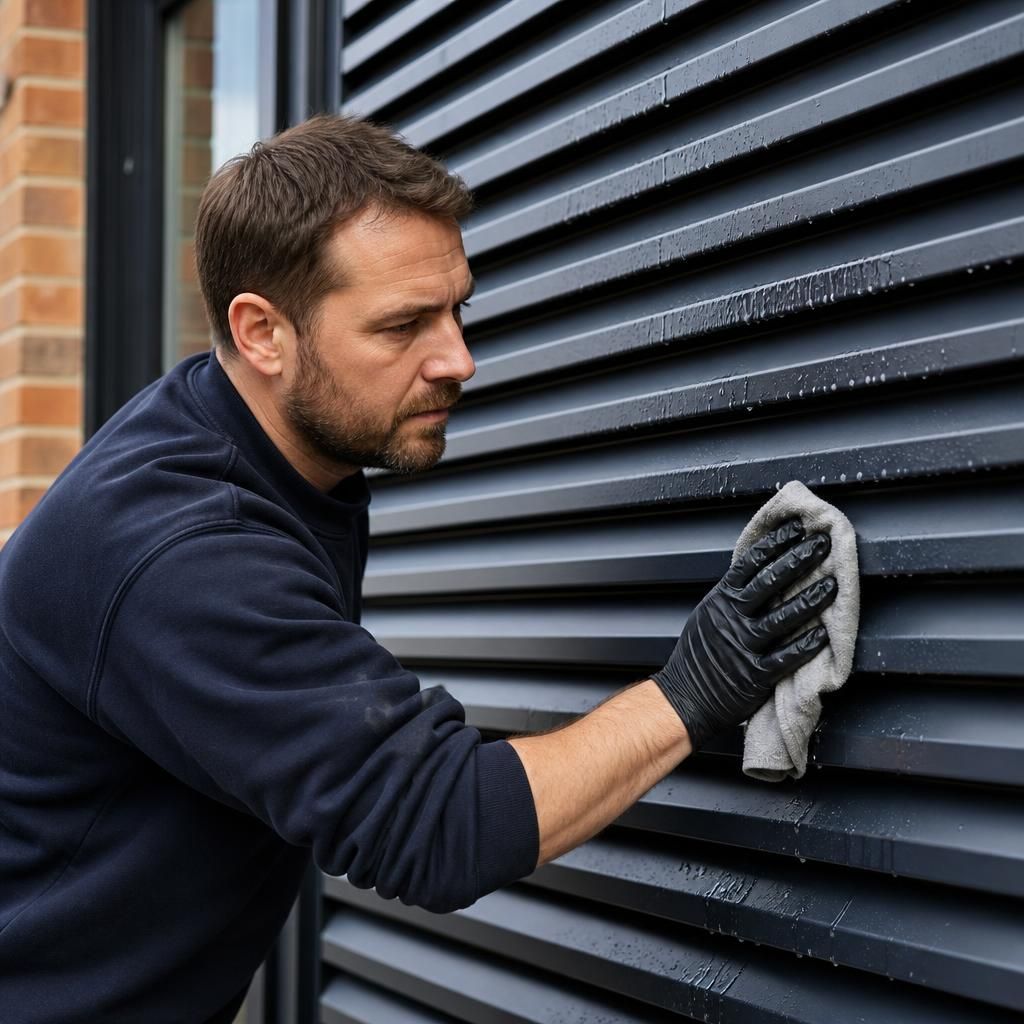
A change in gloss or colour does not automatically mean that powder-coated aluminium has lost its protective function. Prolonged exposure to sunlight and weather can cause gradual fading, mattness or light surface chalking, while the coating may remain firmly bonded to the metal. Maintenance should therefore distinguish normal weathering from defects such as lifting, blistering, flaking or exposed aluminium.
Assess the surface for adhesion, cracking and substrate exposure as well as appearance. If the coating remains intact, gentle cleaning and continued condition monitoring may be appropriate. Where weathering is accompanied by loss of adhesion or corrosion, the component should be assessed for a compatible repair or recoating system rather than treated as a purely cosmetic issue.
Discuss maintenance or recoating for your aluminium surfaces
If inspection shows coating failure beyond a straightforward touch-up, discuss the component’s condition and exposure with a powder coating specialist before choosing a repair or recoating system. Powder-coatings.co.uk can advise on suitable options for aluminium components and arrange collection and delivery across the Midlands and surrounding areas.