

What are the essential steps in the preparation process to ensure effective powder coating adhesion and durability?
Effective powder coating preparation involves inspecting the metal, removing oil, grease, rust and existing coatings, then using suitable abrasive blasting or mechanical preparation to create a clean, suitably keyed surface. The component should be thoroughly rinsed and dried after chemical pretreatment, with masking applied where required, before powder is applied to prevent contamination and support consistent adhesion and durability.
Effective powder coating preparation depends on more than making the metal look clean. The substrate, component design, coating system, electrical contact, application conditions and curing schedule must all be compatible. These factors determine whether the coating bonds correctly, forms a continuous film and withstands the service environment.
- Confirm the substrate and service requirements. Identify whether the component is mild steel, galvanised steel, aluminium or another compatible metal. The substrate affects the preparation method, pretreatment choice, powder type and curing requirements. The expected exposure should also be established, including indoor use, external weathering, moisture, chemicals, abrasion and elevated temperatures.
- Review the component’s design before processing. Weld spatter, sharp edges, deep recesses, enclosed sections and narrow gaps can affect both coating coverage and durability. Welds should be sound and free from residues, while sharp edges may need suitable treatment so the applied film is not excessively thin at the edge. Hollow sections should have appropriate drainage and venting where the process requires it. Without this, trapped moisture, air or process residue can contribute to blistering, pinholing or corrosion beneath the finish.
- Repair defects in the metal rather than relying on powder to hide them. Dents, pits, laminations, rough welds and embedded particles can remain visible after coating. Any repair material must be suitable for the coating temperature and compatible with the intended finish. Silicone-containing products should be avoided because they can cause cratering, fisheyes or other surface defects.
- Select a compatible pretreatment system. The chemical stages should suit the metal and the powder coating specification. A conversion coating can improve the interface between the substrate and powder, but the correct chemistry, contact time, rinsing and drying conditions are essential. On mixed-metal assemblies, the process must be considered carefully because a treatment suitable for one substrate may be unsuitable for another.
- Control the surface condition before application. The prepared component should be handled in a way that prevents fingerprints, workshop dust, moisture and other contamination from being reintroduced. Components should be allowed to reach a stable, dry condition before coating. Condensation is particularly problematic when a cold part is moved into a warmer environment, as a microscopic moisture layer can interfere with adhesion even when the surface appears dry.
- Plan racking and electrical contact. Powder coating relies on electrostatic attraction, so the workpiece needs a reliable conductive connection to earth. Contact points should be positioned where they will not compromise visible surfaces or functional faces. Racks and hooks must also be appropriate for the component’s weight and geometry, with accumulated coating removed as necessary to maintain consistent contact between batches.
- Define masking and coverage requirements from the drawing. Threads, bores, bearing seats, mating faces, electrical contact areas and close-tolerance features may require protection. The masking method must tolerate the oven conditions and should not leave adhesive residue or prevent the powder from reaching adjacent areas. Masking is a process-planning decision, not simply a final cosmetic adjustment.
- Choose the powder system and film requirement for the application. The powder should be compatible with the substrate and any primer or pretreatment used. It should also match the required appearance and performance, such as resistance to weathering, chemicals, impact or abrasion. Excessive film build can affect fit, edge definition and curing, while insufficient build can reduce protection. The target should therefore be set according to the coating manufacturer’s technical data and the component’s function.
- Apply and cure according to the powder specification. Oven settings must be based on the metal’s actual part temperature, not only the temperature displayed by the oven. Component thickness, loading, geometry and thermal mass all influence how quickly the required cure is reached. Under-curing can leave the film with inadequate mechanical and chemical resistance; over-curing may affect colour, gloss or the coating’s physical properties.
- Carry out practical quality checks. Finished parts should be examined for coverage, visible defects, colour and gloss consistency, masking accuracy and damage from handling. Where the specification requires it, checks may include film thickness, adhesion, cure, surface profile or corrosion protection. Any failure should be traced back to the relevant stage—design, substrate condition, pretreatment, application, curing or handling—rather than corrected by applying another coat without identifying the cause.
For batch and specialist work, these controls should be agreed before production begins. Drawings, tolerances, masking points, coating requirements and acceptance criteria give the coater the information needed to prepare the parts consistently. This is particularly important for components assembled from different metals, parts with close tolerances and products exposed to demanding environments.
In practice, durable adhesion comes from treating preparation as a complete process chain. A suitable substrate and sound component design must be matched with compatible pretreatment, controlled electrical contact, an appropriate powder system and a verified cure. If one of these stages is unsuitable, a visually smooth finish may still fail prematurely in service.
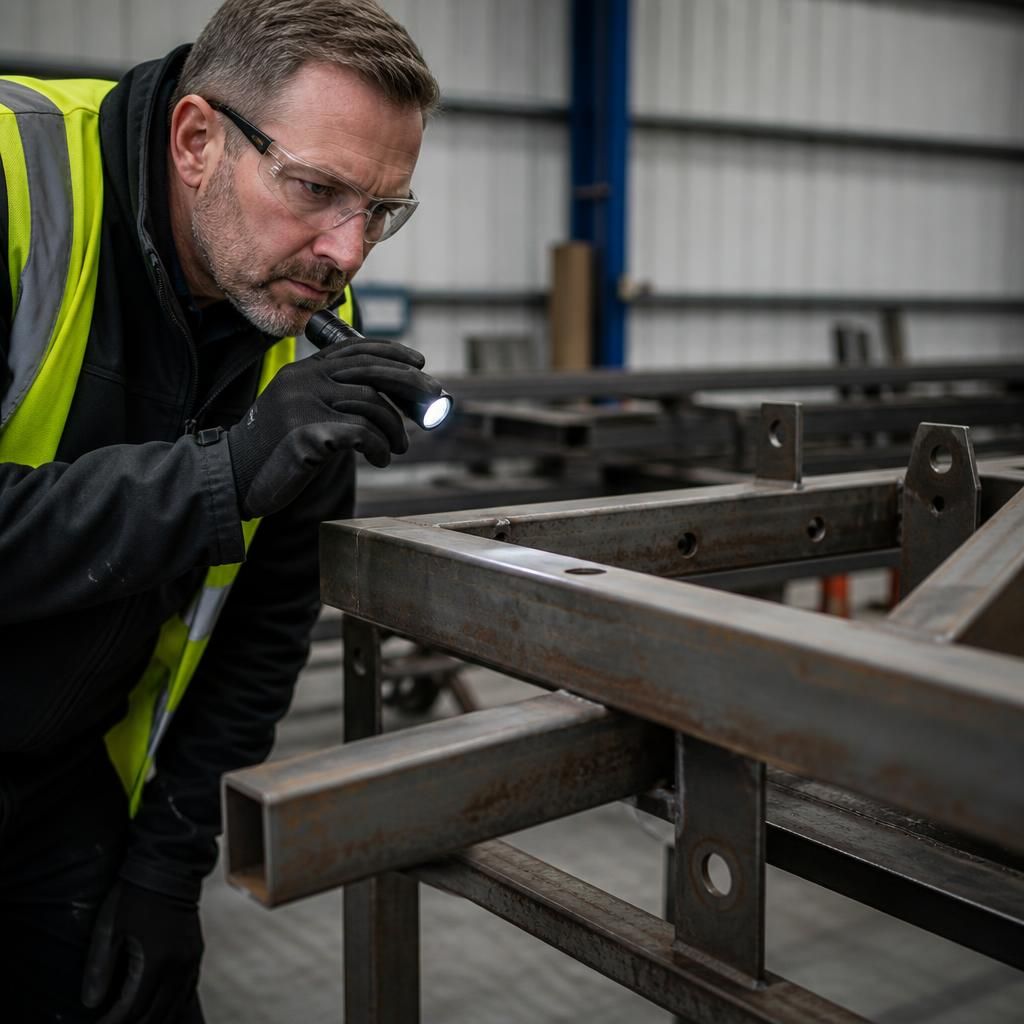
After abrasive blasting, bare steel can develop flash rust if it is exposed to moisture before powder application. The prepared surface should therefore be inspected promptly for any yellow, brown or uneven discolouration. If flash rust appears, the affected area must be prepared again rather than coated over, as the weak oxide layer can compromise adhesion and encourage corrosion beneath the finish. Keeping the component in a clean, dry environment between preparation and coating helps preserve the surface profile created by blasting.