

What are the benefits of using powder coating for steel protection?
Powder coating protects steel by forming a tough, uniform finish that resists corrosion, impact, abrasion and weathering. It also provides a consistent decorative surface, making it suitable for durable protection of steel components in industrial applications.
Powder coating benefits steel protection by combining a bonded barrier with a controlled, repeatable application method. The powder is applied to prepared steel, then heated so the particles melt and cure into a continuous film. This helps separate the steel from moisture, salts, chemicals and other contaminants that can contribute to corrosion, while also providing a clean, durable surface for industrial use.
Long-term barrier performance
A correctly specified coating system reduces the access of water and oxygen to the steel substrate. This is particularly important for components exposed to condensation, rain, road contaminants or process environments. The level of protection depends on the powder chemistry, film thickness, steel condition, preparation standard and curing conditions, so the coating should be selected for the actual service environment rather than treated as a universal solution.
For higher-risk applications, powder coating can be used as part of a multi-layer system. A suitable primer or anti-corrosion layer can provide additional protection beneath the topcoat, while the topcoat supplies the required finish and resistance to the surrounding conditions. This approach is relevant where steel components face persistent moisture, industrial pollutants or demanding outdoor exposure.
Reliable coverage of complex components
Powder is applied as charged particles attracted to an earthed metal component. This electrostatic method can provide efficient coverage across a component’s faces, edges and profiles when the part is correctly positioned and the application parameters are controlled. It is suitable for fabricated items, brackets, frames, panels, enclosures and other steel components with varied geometries.
Coverage is not determined by application alone. Sharp edges, recesses, welds, threaded areas and enclosed sections may require design consideration, masking or a revised preparation and coating method. Identifying these features before treatment helps prevent weak points in the protective system.
Consistent film formation
Because the coating is cured as a complete film, it can produce a consistent surface when powder application, part temperature and curing time are properly controlled. This supports repeatability across batches, which is important where steel parts must have a uniform specification or be assembled alongside other coated components.
Powder coatings are available in different chemistries, textures and gloss levels. The finish should be selected according to exposure, handling requirements, appearance and any cleaning or chemical-contact conditions. A decorative choice alone does not determine protective performance; the underlying coating system and its application remain equally important.
Reduced maintenance requirements
A sound coating system helps limit direct contact between steel and the environment, reducing the conditions that initiate surface deterioration. The practical maintenance requirement will still depend on exposure and use. Routine inspection should identify chips, scratches, damaged edges, corrosion around fixings and areas where water or debris can collect. Repairing local damage promptly is preferable to allowing corrosion to spread beneath the coating.
Cleaning requirements also vary by environment. Removing deposited salts, dirt and industrial residues can help preserve the coating and expose damage at an early stage. Powder coating should therefore be viewed as part of a maintenance strategy, not a substitute for inspection or suitable component design.
Material and application efficiency
Powder coating contains no liquid solvent carrier. During application, unused powder can in some systems be collected for controlled reuse, subject to the equipment, colour management and quality requirements involved. This can reduce material waste compared with processes where overspray cannot be recovered. The environmental advantages depend on the complete preparation, application and curing process, including energy use and waste handling.
The coating is also applied as a dry material, which avoids the drying period associated with evaporating a liquid carrier. Nevertheless, the finished component must still receive the specified heat cure. Parts therefore need to tolerate the curing temperature, and the coating specification must account for the steel grade, component mass and production method.
What determines the result?
- Surface preparation: oil, rust, mill scale, oxides and other contaminants must be removed or suitably treated so the coating can bond to the steel.
- Coating selection: the powder chemistry should match indoor, outdoor, chemical, thermal and mechanical exposure.
- Film thickness: insufficient thickness may leave the steel under-protected, while excessive thickness can affect appearance, curing and fit.
- Application and cure: electrostatic settings, part temperature and cure conditions must be controlled to form the intended film.
- Component design: drainage, access for preparation, edge geometry and avoidance of trapped moisture all influence corrosion protection.
For that reason, powder coating is most effective when the steel, preparation method and coating system are considered together. A coating contractor can assess the component’s construction and intended environment before recommending the appropriate preparation, powder type and finish for the required level of protection.
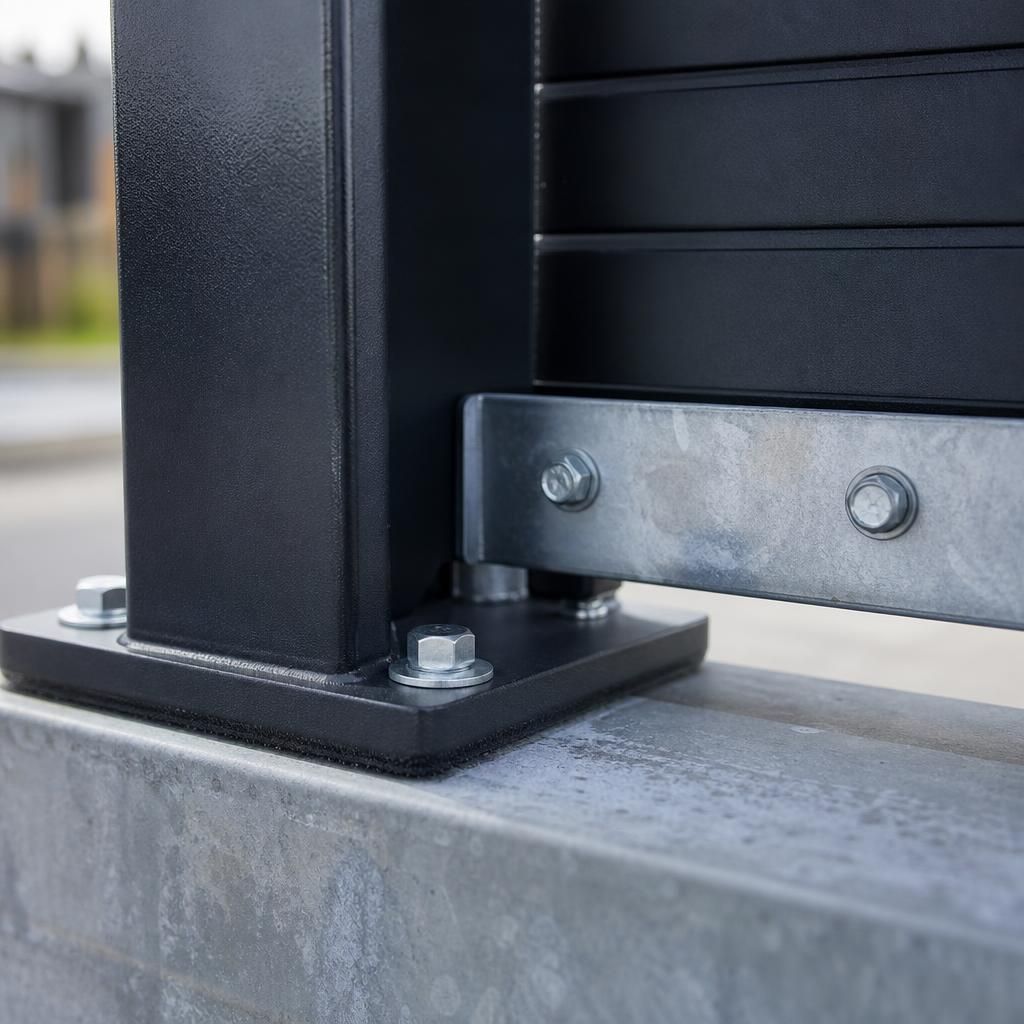
Powder coating can help reduce galvanic corrosion by electrically separating the steel from dissimilar metals such as aluminium or stainless steel. Where the coating remains continuous, it limits direct contact between the two materials and reduces the conditions that can accelerate localised corrosion. This benefit depends on the coating reaching the relevant contact areas and remaining undamaged, so fasteners, joints, edges and masked sections still need careful design. In assemblies that combine different metals, suitable isolation methods should be considered alongside the powder coating system.