

How does aluminium powder coating enhance corrosion resistance?
Aluminium powder coating enhances corrosion resistance by creating a continuous, bonded barrier that separates the metal from moisture, oxygen, salts and other corrosive contaminants. When the aluminium is correctly prepared and the coating is fully cured, it also helps limit under-film corrosion caused by scratches, pores or poor adhesion.
Aluminium powder coating enhances corrosion resistance by stabilising the prepared aluminium surface and adding a tough, electrically insulating finish that reduces the conditions needed for corrosion to develop. Its performance depends on the complete system: alloy selection, design, cleaning, pre-treatment, powder application, curing and subsequent handling all affect the result.
Aluminium already forms a thin oxide layer when exposed to air. This natural film provides some protection, but it can be disturbed by contaminants, alkaline or acidic deposits, abrasion and contact with dissimilar metals. Powder coating works alongside the oxide layer rather than replacing it. Suitable pre-treatment removes oils, dirt and weak surface material, then creates a more stable surface for the coating to anchor to. This reduces the risk of early loss of adhesion, which can otherwise allow corrosion to develop beneath the finish.
The coating also improves resistance through several related effects:
- Electrical insulation: the cured polymer separates the aluminium from conductive moisture and helps reduce electrochemical reactions at the surface.
- Resistance to contaminants: a correctly applied finish makes it more difficult for salts, industrial deposits and cleaning residues to remain in direct contact with the metal.
- Improved wear protection: a suitably specified powder coating can withstand routine handling and minor abrasion better than untreated aluminium, reducing opportunities for the surface to be exposed.
- Stable adhesion: effective pre-treatment and curing help prevent lifting, blistering and flaking, all of which can expose larger areas to corrosion.
Pre-treatment is particularly important for aluminium because the surface oxide can reform quickly after cleaning. A conversion treatment or another aluminium-compatible preparation method can improve the bond between the substrate and powder film. The process must be matched to the alloy, the intended environment and the selected coating system; a preparation method suitable for one metal is not automatically suitable for aluminium.
Powder must also be fully cured. During curing, the particles flow together and form a continuous cross-linked film. Insufficient curing can leave the finish with reduced hardness, adhesion and chemical resistance, while excessive heat or an unsuitable cure schedule can affect the substrate or the appearance. For this reason, the actual metal temperature and the powder manufacturer’s curing requirements need to be considered rather than relying solely on oven air temperature or elapsed time.
Component design has a direct influence on corrosion performance. Water traps, unsealed joints, overlapping faces and uncoated recesses can retain moisture and contaminants even when the main faces are well finished. Drainage holes, suitable joint details and accessible surfaces help the coating system perform as intended. Cut edges, drilled holes and areas affected by fabrication should receive appropriate preparation before coating, since these locations are more vulnerable to localised attack.
Contact between aluminium and another metal can create galvanic corrosion when moisture provides an electrolyte. The risk depends on the metals involved, their exposed areas and the environment. Powder coating reduces direct contact on coated faces, but fasteners, bare edges and damaged areas may still need attention. Compatible fixings, isolating washers or sealants, and sensible joint design can provide additional protection where dissimilar metals are assembled together.
The surrounding environment should guide the coating specification. Indoor components in a clean, dry setting generally face less corrosive stress than parts exposed to road salts, coastal air, industrial fumes, frequent washing or persistent condensation. A standard architectural or industrial powder may not be appropriate for every exposure, so the required pre-treatment, resin chemistry, colour and finish should be selected according to the component’s use rather than appearance alone.
Quality checks support corrosion resistance by identifying faults before components enter service. Useful checks can include visual inspection for pinholes, craters, runs and uncoated areas, confirmation of coating coverage, dry-film thickness measurement, adhesion assessment and verification of cure. Where the design includes complex profiles or critical service conditions, inspection should pay particular attention to edges, recesses, joints and fabricated areas.
Powder coating is not a substitute for maintenance or sound fabrication. Deposits should be removed using cleaning methods compatible with the finish, and scratches, impact damage or signs of lifting should be assessed promptly. Repair requirements depend on the extent of the damage and the service environment. When aluminium components are correctly prepared, specified, coated, cured and maintained, powder coating provides a practical long-term method of reducing corrosion risk while also supplying the required colour and surface finish.
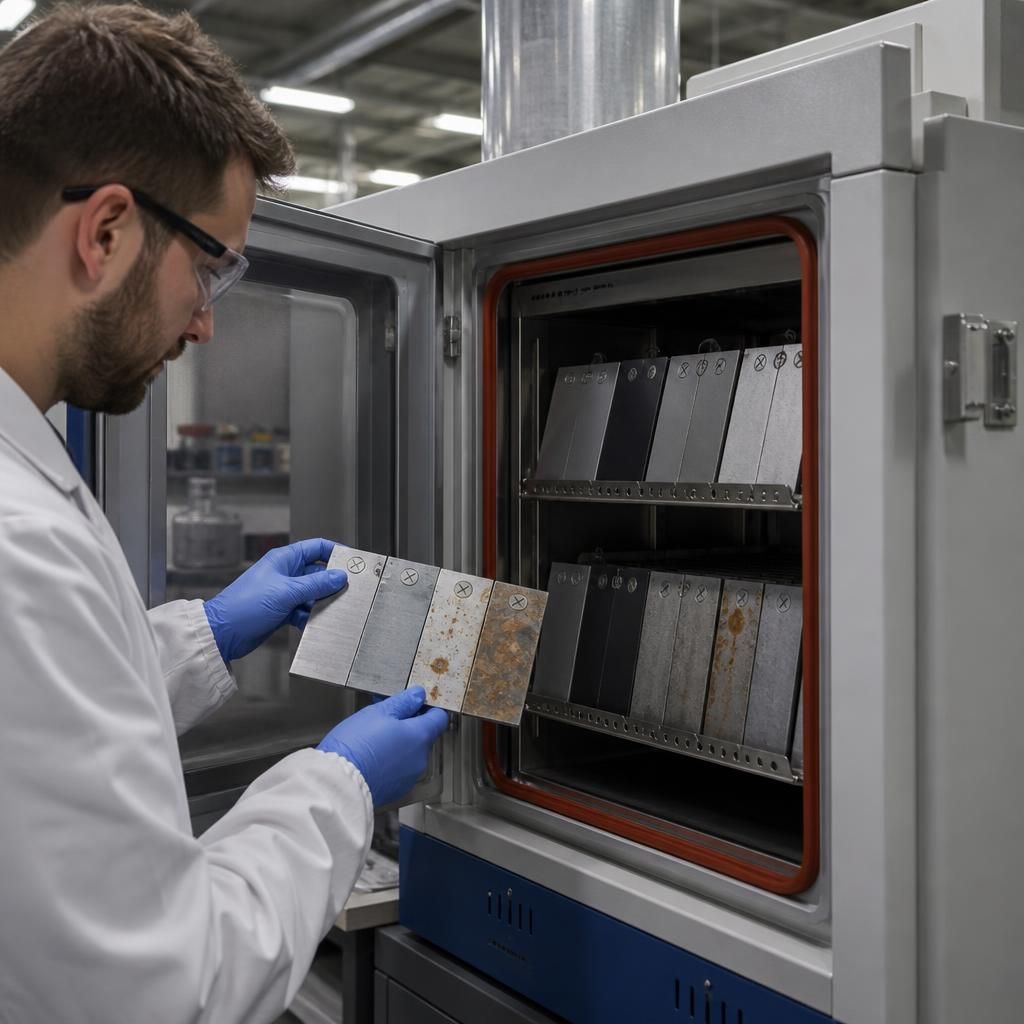
Aluminium powder coating should be judged as a complete corrosion-protection system, rather than by the powder film alone. Laboratory exposure tests can compare coating systems by examining blistering, loss of adhesion, surface corrosion and corrosion spreading from a deliberate defect. These results are useful for specification and quality assurance, but they do not predict an exact service life because real performance also depends on the alloy, component design, exposure conditions and maintenance. For critical applications, the coating specification should therefore define the required performance, inspection criteria and exposure category before production begins.