

What are the key considerations for selecting an anti-corrosion powder coating for different types of steel?
Selecting an anti-corrosion powder coating depends on the steel grade and condition, the exposure environment, the required coating thickness, and the component’s size, shape and end use. The system should also be matched to suitable surface preparation, coating chemistry and curing requirements so it provides the required protection and finish without compromising adhesion.
An anti-corrosion powder coating should be selected as part of a complete coating system, not as an isolated finish. The correct choice depends on how the particular steel behaves during preparation and curing, how readily it accepts the coating, the corrosion protection required at vulnerable areas, and the performance specification for the finished component.
Consider the type and metallurgy of the steel. Mild and low-carbon steel are commonly powder coated, but their surface condition can vary considerably depending on whether the material is hot-rolled, cold-rolled, fabricated, welded or previously treated. Mill scale, weld residues, embedded contaminants and areas of surface oxidation can all affect adhesion and create early corrosion sites if they are not dealt with before coating.
High-strength or heat-treated steels require additional care where the curing cycle could affect the component’s properties. The coating specification should be checked against the steel manufacturer’s requirements, particularly for parts that depend on controlled hardness, dimensional accuracy or fatigue performance. The powder must cure fully, but the selected process should not introduce unnecessary thermal exposure to the substrate.
Galvanised and zinc-coated steel need a compatible system. Zinc-coated surfaces can offer an additional barrier against corrosion, but they may present adhesion and gas-release issues during powder coating. The specification should account for the condition of the zinc layer, the presence of passivation treatments and the possibility of pinholes or surface defects. A coating system intended for galvanised steel, together with suitable preparation and curing control, is generally more appropriate than treating it in the same way as untreated mild steel.
Cast steel and cast iron may require a different assessment from fabricated plate or tube. Cast materials can contain pores, moulding residues and areas that retain oil or moisture. These may release gases during baking and produce blisters, pinholes or other film defects. The design, porosity and previous service history of cast components should therefore be reviewed before choosing a powder system, especially where the part has been machined, repaired or exposed to lubricants.
Stainless steel and weathering steel should not be treated as ordinary carbon steel. Stainless steel has a passive surface that can make adhesion more difficult unless the preparation and coating system are suitable. Contamination with free iron can also create localised staining or corrosion. Weathering steel may already have a deliberately formed oxide layer, and applying a powder coating can alter the way that material behaves. The condition of the surface, the intended appearance and the treatment of cut edges should be established before specifying the finish.
Assess the required corrosion performance of the whole system. A durable result depends on the interaction between the steel, pretreatment, primer where required, powder topcoat and cured film. For demanding exposure, a primer and topcoat arrangement may provide more robust protection than a single layer, particularly at edges, joints, welds and areas vulnerable to impact. Epoxy-based products can provide strong barrier protection, while polyester-based finishes are often considered where resistance to weathering and colour retention are important. The appropriate chemistry should be confirmed against the exposure and the manufacturer’s technical data rather than selected by resin name alone.
Film continuity is particularly important on steel components. Sharp corners, narrow returns, recessed sections, bolt holes and internal faces can receive less powder than broad, accessible surfaces. The specification should therefore address edge coverage, minimum film build, access for application and the risk of thin areas. Component design can be modified where practical by reducing sharp edges, improving drainage and preventing crevices that could retain water.
Check compatibility with the component’s service conditions. Corrosion resistance is only one part of the selection. The coating may also need to withstand abrasion, impact, chemicals, cleaning agents, moisture, ultraviolet exposure or repeated temperature changes. A finish that performs well on sheltered structural steel may not be suitable for an automotive component, plant enclosure or fabricated item exposed to industrial contaminants. The required balance between barrier protection, hardness, flexibility and weathering resistance should be stated before the powder is chosen.
Match the finish to inspection and maintenance requirements. Colour and gloss affect appearance, but they can also influence how easily contamination, scratches and localised corrosion are detected. A specification should define acceptable visual variation, surface defects, coating thickness, adhesion and repair methods. It should also state how damaged areas, drilled holes, cut edges and assembled joints will be protected after coating, since these locations can become corrosion paths even when the main coated surface remains intact.
For fabricated steelwork, the most reliable selection process is to identify the exact steel type and previous treatment, record the exposure and service requirements, review vulnerable design features, and then obtain a coating system supported by technical data and relevant testing. Where the steel is mixed, galvanised, cast, stainless or previously coated, the specification should distinguish between substrates rather than applying one generic powder to every component.
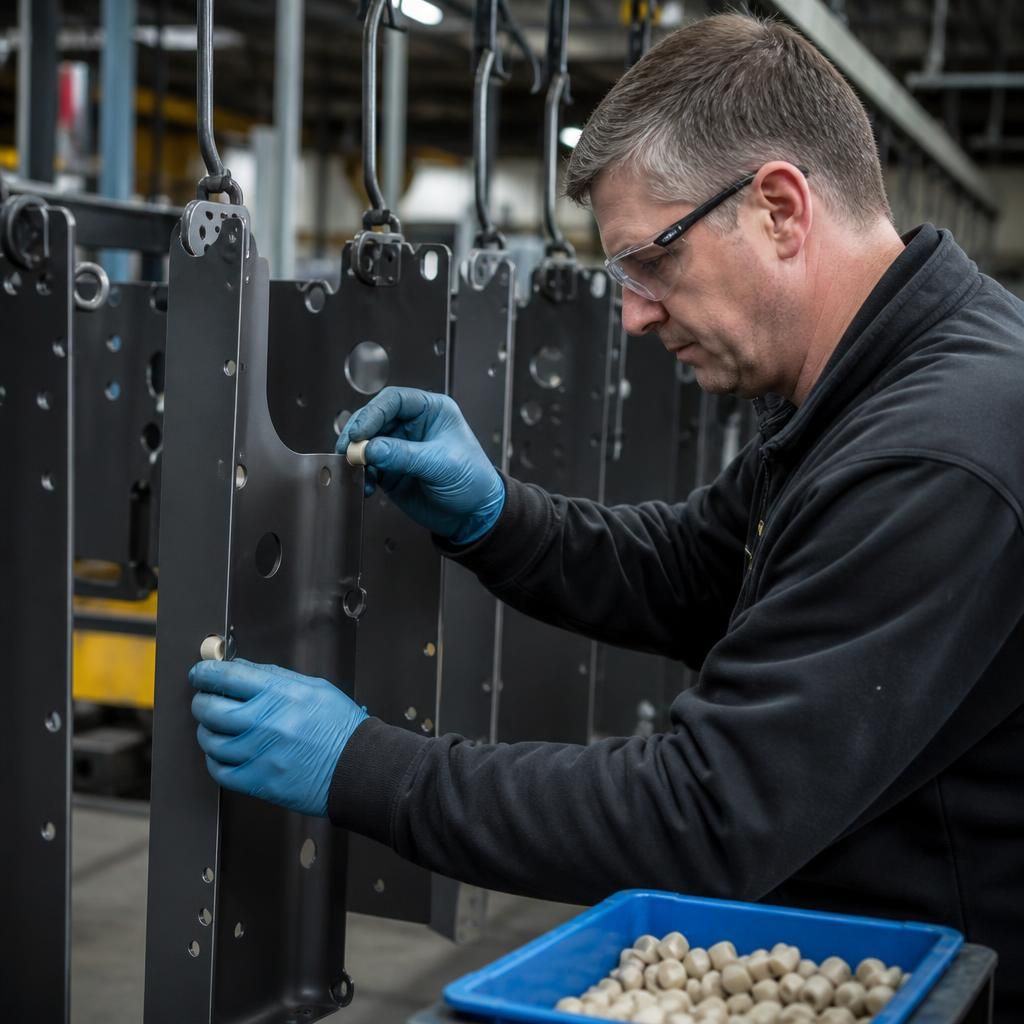
Dimensional tolerances are an important consideration when selecting an anti-corrosion powder coating for steel components that must be assembled accurately. The cured film adds thickness to every coated surface, which can affect threaded holes, bearing seats, sliding faces, close-fitting joints and mating surfaces. These areas may need to be masked, plugged or deliberately left uncoated, with the treatment defined before production begins.
The specification should also identify surfaces that require electrical continuity, earthing or controlled contact after coating. Suitable contact points can be protected during application and cleaned where necessary, while exposed steel at these locations should receive appropriate corrosion protection. Agreeing these details alongside the coating type helps prevent fit, function and assembly problems without reducing protection on the surfaces that need it.
Discuss your anti-corrosion powder coating requirements
Discuss your anti-corrosion powder coating requirements with Powder-coatings.co.uk, including the steel type, service environment and performance specification. Sharing drawings or component details can help identify a suitable coating system and any areas requiring special treatment.