

What are the critical maintenance and care practices required to maximise the lifespan and performance of powder-coated metal components?
Maximise the lifespan and performance of powder-coated metal components by cleaning them regularly with mild detergent, inspecting for chips, scratches, corrosion and moisture ingress, and avoiding abrasive tools or harsh chemicals. Repair damaged areas promptly and use maintenance methods suited to the coating type, component environment and level of exposure.
Maximising the service life of powder-coated metal components depends on more than cleaning the visible surface. A reliable maintenance approach should also control handling, storage, installation, chemical exposure, water retention, temperature and the condition of joints or fixing points. The correct regime varies according to the powder chemistry, substrate, film build and operating environment, so the coating specification and the coater’s technical guidance should form the basis of the maintenance plan.
Establish the service conditions before setting maintenance requirements. Components installed indoors in a dry manufacturing area face different risks from those exposed to external weather, road salt, industrial fumes, marine air, cleaning agents or continuous condensation. Record the coating type, colour, substrate, installation location and any substances likely to contact the surface. This information helps determine suitable cleaning materials, inspection frequency and repair methods, particularly where nylon, epoxy, polyester or specialist protective coatings have different chemical and weathering characteristics.
- Keep a coating record: retain the coating specification, application details, batch information where available and any approved repair products. This prevents an incompatible touch-up material being used later.
- Assess exposure: give greater attention to components exposed to moisture, salt, chemicals, ultraviolet light, abrasion or repeated temperature changes.
- Review changes in use: reassess the maintenance approach if a component is moved outdoors, exposed to a new process chemical or subjected to heavier mechanical contact.
Protect the coating during handling and storage. Powder coating can be damaged before a component reaches its final position. Use suitable lifting and packing methods, avoid dragging parts across hard surfaces and prevent metal-to-metal contact where movement could mark the finish. Protective wrapping should not trap condensation against the coating, and components should be stored in a clean, dry, ventilated location away from incompatible chemicals. Separators, soft supports and non-staining protective materials can reduce pressure points and rubbing during transport or assembly.
Pay particular attention to edges, apertures and interfaces. Water and contamination can remain around folded edges, drain holes, overlaps, brackets, hinges and fixing points even when the main face appears sound. Components should be installed so that water can drain rather than collect. Do not block designed drainage paths, and avoid creating pockets where debris remains in contact with the finish. During installation, use appropriate tools and care around coated faces; excessive tightening, drilling swarf and uncontrolled cutting can create local damage that is not representative of the original coating performance.
Where a coated component is drilled, cut or modified after coating, the exposed metal should be treated using a compatible corrosion-protection and repair system specified for that substrate and environment. Bare edges should not be left as an incidental consequence of installation. The same principle applies to damaged fixing holes, removed brackets and areas affected by welding: remove contamination, prepare the affected area correctly and use a repair coating compatible with the original system. A decorative marker or general-purpose paint is not automatically a suitable protective repair.
Control contact and operating conditions. Repeated impact, vibration, sliding contact and contact with sharp parts can progressively wear a coating even where there is no single obvious incident. Check whether supports, clamps, seals or moving components are rubbing against the finish. Where practical, alter the interface or use a suitable non-abrasive isolating material. Do not place hot items against a coating unless its specified temperature resistance is suitable for that use. Repeated heating and cooling can also place stress on the coating and substrate, so areas around heat sources deserve specific review.
Use chemicals only after checking their compatibility with the coating. Process fluids, solvents, disinfectants, degreasers and concentrated detergents may soften, stain, dull or undermine some finishes. Keep exposure within the limits stated in the coating documentation, remove accidental splashes using an approved method and do not allow residues to dry on the surface. If a component is part of a wash-down or chemical-processing system, assess the complete exposure rather than relying on the generic term “powder coated”. Concentration, temperature, contact time and repeated exposure can all affect performance.
Inspect the whole assembly, not just the most visible face. Include concealed returns, underside surfaces, joints, fasteners, brackets, drainage points and areas beneath seals. Compare observations with previous inspection records so gradual changes can be identified. Pay attention to loss of gloss or colour, blistering, lifting, staining, powdering, cracking, unusual deposits and changes around interfaces. These signs can indicate chemical attack, excessive exposure, poor drainage, movement or a problem beneath the coating. The underlying cause should be addressed before applying a cosmetic repair.
Maintenance findings should be recorded with the component identity, location, date, operating conditions, observed change and action taken. Photographs and notes on the cleaning or repair product used can help distinguish a coating issue from contamination or a substrate-related problem. Escalate recurring deterioration, widespread delamination, deformation or suspected loss of substrate protection for technical assessment rather than repeatedly covering the affected area.
When a repair is required, the result depends on preparation as much as on the replacement material. The affected area normally needs to be made sound, clean and suitably keyed without unnecessarily enlarging the repair. Remove loose material, deal with any substrate corrosion and protect adjacent sound coating from further damage. Confirm colour, gloss, texture, film compatibility and environmental suitability before selecting a repair system. For extensive or safety-critical deterioration, removing the component and arranging professional recoating may be more appropriate than repeated local touch-ups.
Finally, align the care regime with the coating manufacturer’s instructions and the component’s risk profile. A documented programme covering storage, installation, routine care, exposure review, inspection and repair gives powder-coated metal the best opportunity to retain its protective and functional properties throughout its intended service life.
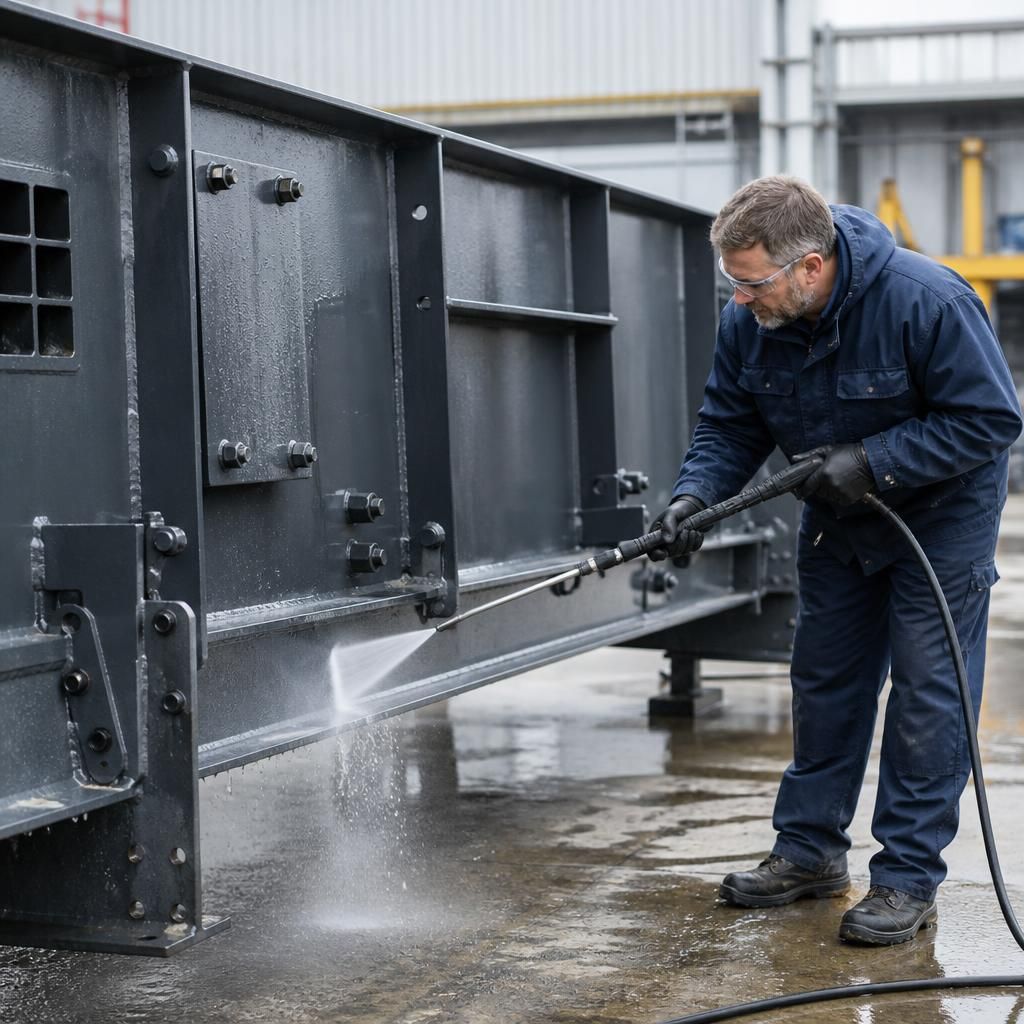
Cleaning equipment and technique can affect the condition of powder-coated metal as much as the cleaning product itself. High-pressure water jets should not be directed at coating edges, joints, seams, seals or existing chips, because forceful water can drive moisture beneath a weakened film and accelerate lifting or corrosion. Use controlled pressure suited to the component, keep the jet moving and avoid directing water into areas that cannot drain freely.
After washing, check that water has not collected behind covers, around fixings or within folded sections. Allow these areas to drain and dry before the component is returned to service. If water repeatedly remains trapped, the issue should be corrected through drainage, sealing or installation changes rather than treated as a surface-cleaning problem.
Discuss maintenance and repair options for your powder-coated components
If inspection shows widespread deterioration or repeated local repairs, discuss the component’s condition and coating requirements with Powder-coatings.co.uk. A technical assessment can help determine whether professional recoating is more suitable than further touch-ups.