

How do you prepare aluminium surfaces for powder coating to ensure optimal adhesion and finish quality?
Aluminium surfaces are prepared by removing grease, dirt, oxidation and other contaminants, followed by controlled abrasion or chemical etching to create a clean, receptive surface. After thorough rinsing and drying, an appropriate conversion pretreatment may be applied before powder coating to support strong adhesion, corrosion protection and an even finish.
Optimal preparation of aluminium for powder coating begins before the coating line: the component, alloy, existing condition and intended service environment must be assessed so that the preparation method is compatible with the metal and the required finish. Handling, component design, weld quality, masking, racking and process control all influence whether the coating performs consistently.
Assess the aluminium and its condition
Aluminium is supplied in many forms, including extrusions, sheet, castings and fabricated assemblies. These can respond differently to preparation because of variations in alloy composition, surface texture, porosity and previous treatment. An assessment should identify areas such as:
- Existing anodising, paint, powder coating or other surface treatments that need to be removed or accommodated.
- Oil, drawing compounds, polishing residues or marking materials that may be present from manufacture.
- Cast surfaces, pits, inclusions and porous sections that could retain contamination or release gas during curing.
- Welds, heat-affected areas and joint lines, which may have a different surface condition from the parent metal.
- Scratches, burrs, sharp edges and handling damage that could remain visible through the finished coating.
The preparation route should be agreed with the coating requirements rather than applying one identical treatment to every aluminium part. Decorative components may require tighter control of surface uniformity, while structural or industrial parts may place greater emphasis on corrosion protection and coverage of difficult-to-reach areas.
Deal with fabrication defects before coating
Powder coating is not intended to level substantial fabrication defects. Burrs should be removed, sharp edges softened where the design permits, and weld spatter eliminated. Welds should be continuous and suitably finished where an uninterrupted appearance or corrosion protection is required. Residues from grinding and abrasive work must not be left embedded in the aluminium.
Design also affects preparation and coating performance. Enclosed sections, overlapping joints and narrow channels can retain treatment fluids or rinse water. Drainage and vent holes may be needed in hollow fabrications, both to support the preparation process and to reduce the risk of trapped moisture or air causing defects during curing. Any holes must be positioned and sized in accordance with the component’s function and appearance requirements.
Control masking and racking
Areas that must remain uncoated, such as threads, bearing seats, electrical contact points and close-tolerance faces, need suitable masking. Masking materials must withstand the process temperatures and should be applied so that their edges do not create excessive build-up or an untidy coating boundary.
Racking needs to provide a secure electrical contact without damaging visible surfaces. The contact point may leave a small uncoated mark, so it should be placed in an agreed concealed or non-critical location where possible. Components should also be supported so that they do not touch one another during application or curing. Poor positioning can cause shadowing, uneven powder deposition, contact marks or insufficient coverage inside profiles.
Use an aluminium-compatible chemical process
Aluminium can be adversely affected by an unsuitable chemical treatment. Excessive alkalinity, prolonged exposure or poorly controlled rinsing may alter the surface, attack certain alloys or leave residues that interfere with coating adhesion. The treatment sequence therefore needs control of concentration, temperature, contact time and rinse quality.
A conversion treatment may be selected according to the alloy, required corrosion performance, applicable environmental requirements and powder system. The important point is compatibility: the pretreatment must form a stable base for the specified powder rather than simply produce a visibly clean surface. Where an existing finish or unusual alloy is involved, a small trial or technical review can help confirm that the selected route is appropriate.
Prevent recontamination after preparation
Once the aluminium has passed through preparation, it must be protected from fingerprints, workshop dust, oil, moisture and contact with unsuitable materials. Operators should use clean handling practices and avoid placing prepared parts on dirty benches or unprotected floors. Parts should move to coating without unnecessary delay, because a prepared surface can collect contamination or develop surface changes if left exposed.
Particular care is needed with assemblies containing joints, folds or hollow sections. Residual liquid in these areas can emerge later and cause cratering, pinholes or local adhesion problems. The component should therefore be positioned to allow complete drainage and drying, with attention paid to seams and cavities that are not easy to inspect visually.
Verify the surface before powder application
Inspection should confirm that the prepared part is suitable for coating, rather than relying only on the appearance of the aluminium. Checks may include:
- Visual examination for remaining oil, stains, oxidation, burrs, weld contamination and physical damage.
- Confirmation that masked areas and rack contact points are correctly positioned.
- Inspection of drainage, vents and concealed sections for retained moisture or treatment residue.
- Review of the preparation and pretreatment process records where repeatability is important.
- Trial coating or adhesion assessment when the alloy, previous finish or component design presents an unfamiliar risk.
After powder application, the coating must be cured in accordance with the powder system’s requirements. Aluminium conducts heat differently from heavier steel components, so the metal temperature and time at temperature need to be considered rather than judging the cure only from the oven air temperature. Correct preparation cannot compensate for under-curing, over-curing or an unsuitable application setting.
For batch work, consistent loading, racking and inspection methods help ensure that each component receives the same preparation conditions. Complex aluminium fabrications, castings and assemblies with mixed surface conditions merit particular attention because defects are more likely to originate in inaccessible areas or at transitions between materials and welds.
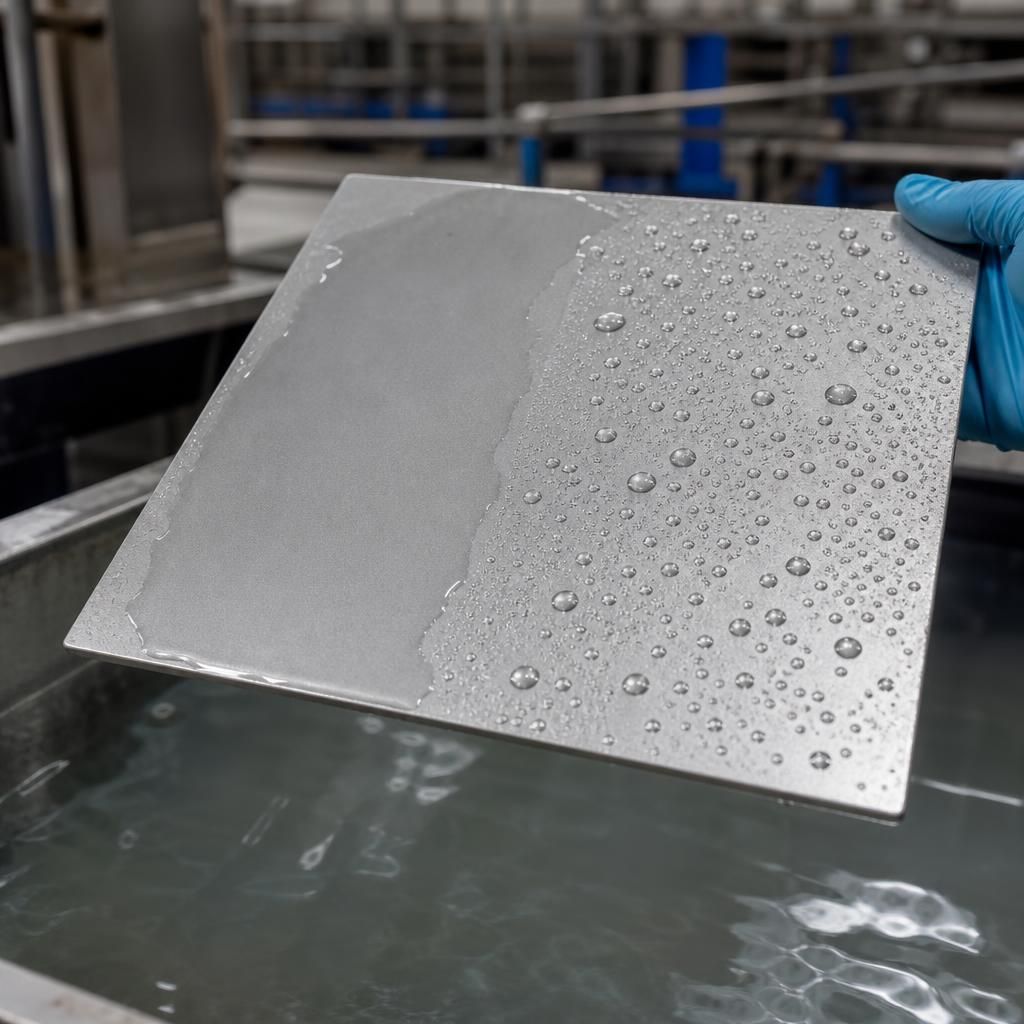
A water-break test is a simple way to check whether an aluminium surface is free from oils and other water-repellent contamination before powder coating. When clean, rinsed aluminium should hold a continuous film of water; separated droplets or dry patches indicate that further cleaning may be needed.
The test should be carried out using clean water and handled components, without touching the surface afterwards. It is a useful visual check, but it does not confirm that the alloy, pretreatment or surface profile is suitable for the specified powder system. Those factors still require process records, technical review or a trial where the component presents unusual risks.
Discuss Your Aluminium Surface Preparation Requirements
Discuss your aluminium component drawings, alloy, existing surface treatment and finish requirements with the powder-coating.co.uk team to identify a suitable preparation route. This can help clarify any masking, drainage, racking or trial requirements before coating begins.