

How do different powder coating processes, such as 2 coat or 3 stage powder coating, affect the durability and performance of metal components?
A two-coat system, typically a primer followed by a topcoat, can provide greater film build, corrosion protection and mechanical durability than a single coat. A three-stage process usually refers to multiple preparation or treatment stages rather than three powder layers, so its performance depends on the pretreatment, coating chemistry, curing and service environment as well as the number of stages.
In practical terms, a two-coat system can improve protection where additional film build or a dedicated corrosion-control layer is required, while a three-stage process can improve durability by preparing and conditioning the metal more effectively before coating. These terms are not directly comparable: “two coat” normally describes the number of powder layers, whereas “three stage” usually describes preparation or treatment stages. The final performance depends on how each stage is specified and controlled, not on the number alone.
How a two-coat system affects performance
A two-coat powder system applies separate layers that perform different functions. The first layer may provide adhesion, barrier protection or corrosion resistance, while the second supplies the required colour, surface finish and additional environmental protection. This approach can be useful where the component will experience moisture, abrasion, handling or exposure to a demanding industrial environment.
Compared with a single-layer application, the additional layer may provide:
- greater overall film build and a longer path for moisture or contaminants to reach the substrate;
- improved resistance to corrosion when the underlying layer is correctly matched to the metal and service conditions;
- better mechanical protection against scuffing, impact and handling damage;
- greater flexibility in combining functional and decorative requirements; and
- more consistent protection on components where one coating cannot meet every performance requirement.
However, two coats do not automatically produce a more durable finish. Each layer must bond properly, remain compatible with the next layer and be cured according to its specification. Poor intercoat adhesion, excessive thickness, trapped contamination or incorrect curing can create weak points, cracking, loss of gloss or premature detachment. The design of the system is therefore more important than simply adding another layer.
What a three-stage process usually changes
A three-stage process generally refers to a sequence of preparation treatments before powder application. Depending on the metal and the required protection, this may involve cleaning and degreasing, removal of oxides or scale, a conversion treatment, rinsing and drying. In other specifications, “three stage” may describe a particular combination of cleaning, pretreatment and sealing steps. The exact meaning should be confirmed with the coater because terminology varies between specifications.
These stages affect durability mainly by improving the condition of the surface beneath the powder. Effective preparation can remove oil, dirt, residues and corrosion products that would otherwise interfere with adhesion. A suitable conversion or sealing treatment can also help protect the substrate at the coating interface and reduce the risk of corrosion developing beneath damaged or exposed areas.
For this reason, a carefully controlled three-stage preparation process may produce a more reliable finish than a simpler preparation route, even when both are followed by the same powder coating. Its value is greatest where the component faces moisture, salts, outdoor exposure, condensation or other conditions that make underfilm corrosion a concern.
The main factors that determine the result
- Substrate condition: Rust, mill scale, oil, weld spatter, sharp edges and previous coatings can all reduce adhesion or create areas of uneven coverage. The required preparation depends on whether the component is steel, galvanised steel, aluminium or another compatible metal.
- Surface profile: Mechanical preparation can create a suitable key for the coating, but an excessively rough or contaminated surface may remain visible through the finish or create thin spots on edges and high points.
- Coating compatibility: The powders used in a multi-layer system must be chemically and thermally compatible. A system intended for corrosion protection may not have the same requirements as one chosen primarily for colour retention, chemical resistance or flexibility.
- Film thickness: Insufficient coverage can leave the substrate vulnerable, while excessive build can cause defects, poor edge coverage, brittleness or curing problems. Thickness should be controlled across the component rather than judged only from its appearance.
- Curing: Powder particles need the correct combination of temperature and time at the metal surface. Under-curing can leave the finish weak or poorly bonded; over-curing can affect appearance and performance. Large, dense or irregular parts may heat differently from small, simple components.
- Component geometry: Recesses, holes, corners, welds and folded sections are more difficult to clean, coat and inspect. Drainage and access should be considered before processing, particularly where liquid pretreatment is involved.
- Service environment: Outdoor exposure, industrial chemicals, abrasion, heat, moisture and ultraviolet light place different demands on the coating. A system suitable for an internal fabricated part may not be suitable for exposed architectural or automotive components.
Durability is also specific to the type of damage expected. A two-coat arrangement may be selected to increase barrier and mechanical protection, but it will not compensate for unsuitable chemistry or poor preparation. A three-stage pretreatment may provide a strong foundation for corrosion resistance, but it does not by itself determine resistance to impact, heat, solvents or ultraviolet exposure. Those properties come from the complete specification, including the powder type, substrate, preparation, application and cure.
When comparing systems, ask for the process to be described in terms of its purpose rather than its label. Useful questions include: what is each coat or treatment intended to do; which contaminants and surface defects are removed; how is intercoat adhesion verified; what service environment has been allowed for; and how are coverage, thickness and cure checked? This gives a more meaningful comparison than treating “two coat” or “three stage” as a universal quality ranking.
For a B2B coating specification, the component’s use should be provided before the process is selected. Details such as the metal grade, dimensions, joint and weld condition, expected exposure, handling requirements, appearance, and any chemical or temperature demands help determine whether a single layer, a two-coat system, or a more extensive preparation sequence is appropriate. Powder-coating specialists can then assess the substrate and recommend a process based on the required balance of adhesion, corrosion resistance, mechanical durability and finish quality.
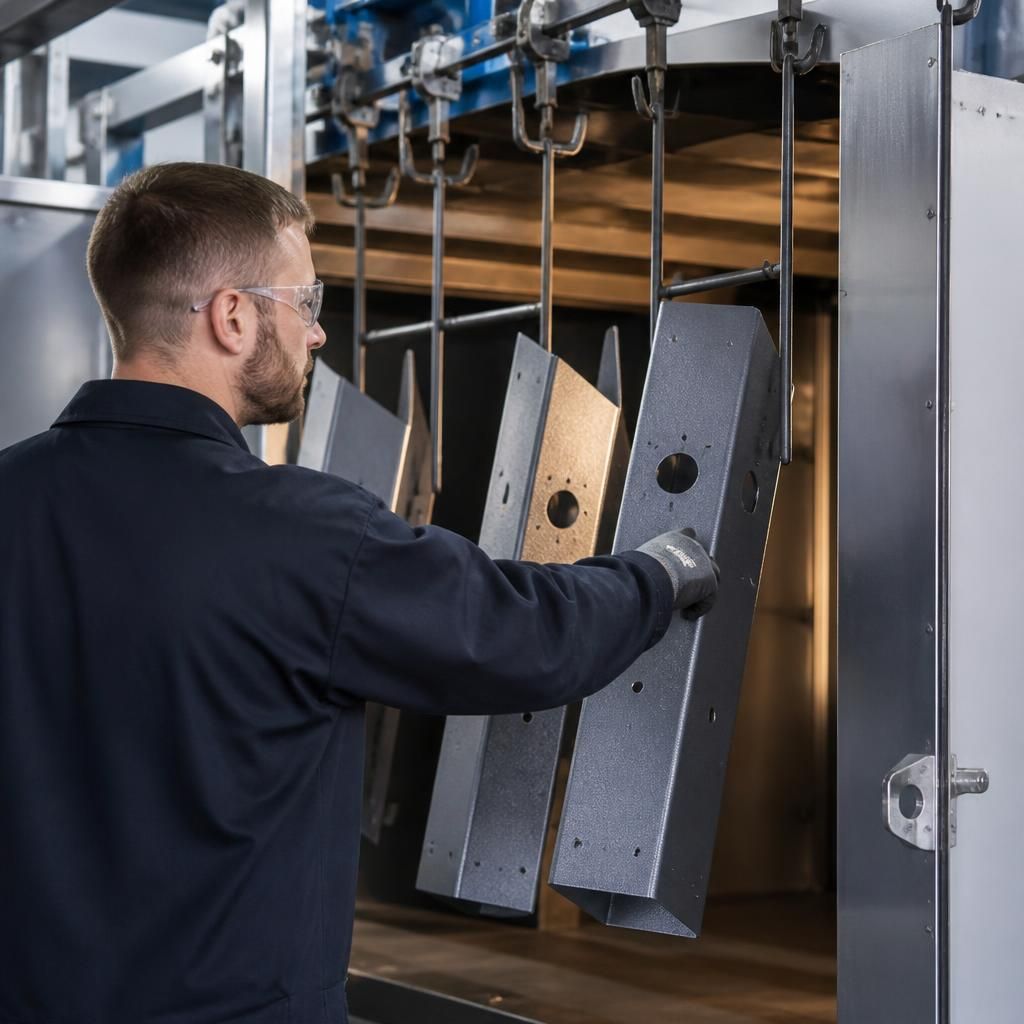
The cure sequence is a critical difference in a two-coat powder system. The first coat may be fully cured before the second is applied, or it may be gelled or partially cured so that the layers bond during the final bake. The correct method depends on the powders, substrate and required performance.
Incorrect sequencing can cause poor intercoat adhesion, loss of flexibility, blistering or an uneven finish. The part must reach the specified metal temperature for the required time, and the combined heat exposure must be suitable for both coatings. This is particularly important for thick or irregular components, which may heat more slowly than the oven atmosphere suggests.